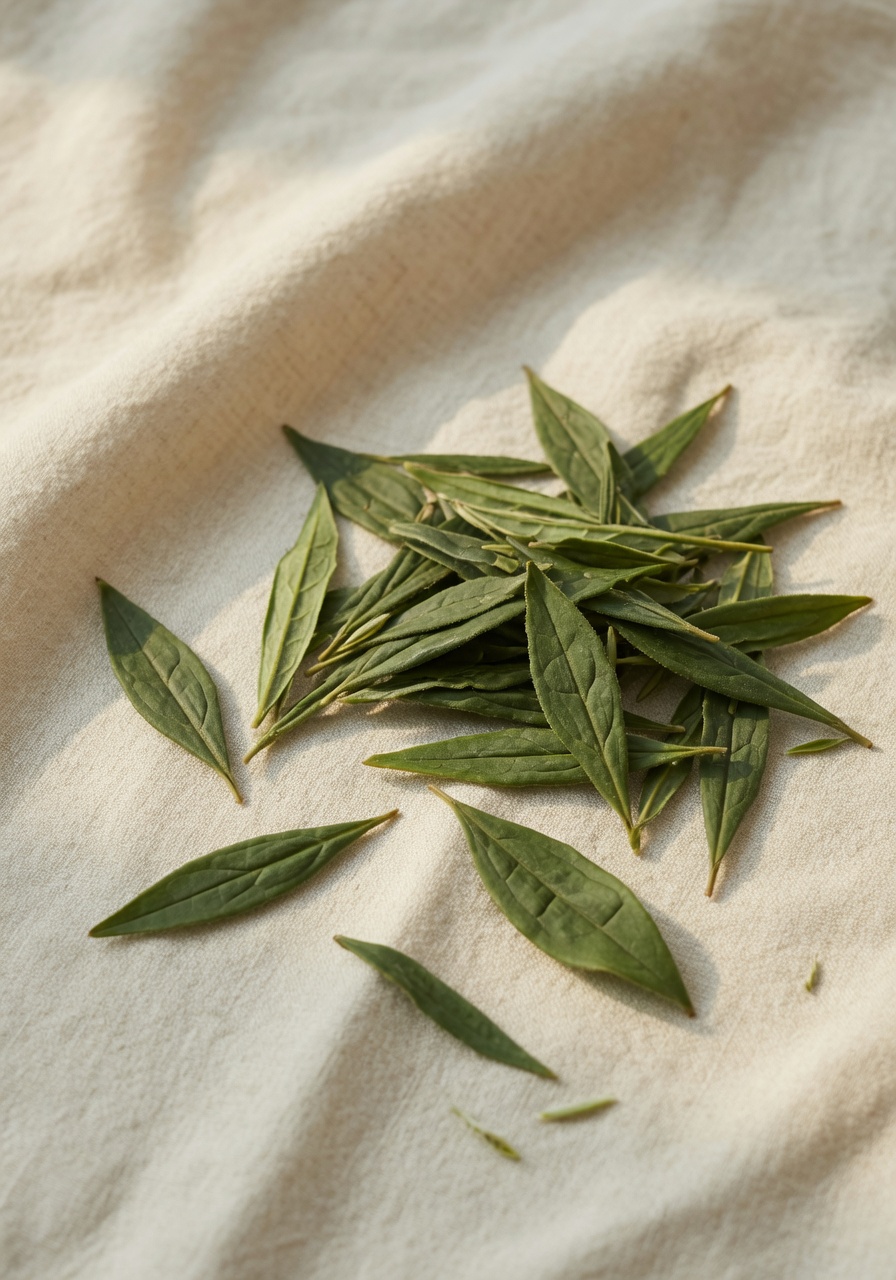
Shifeng — Lion Peak — is the highest of the four classical Longjing ridges above West Lake, and the one most growers will quietly tell you they envy. The soil is a weathered yellow loam over sandstone, the mornings sit under mist until nearly ten, and the old qunti seed-bushes here push their first buds slowly enough that the sugars have time to build. This lot was picked across three mornings in late March 2026, ten days before qīngmíng, when the standard is still one bud and one just-unfurling leaf.
This batch comes through a grower cooperative we have worked with for six seasons.
The firing was done in iron woks within four hours of plucking. The maker is a third-generation Shifeng family who still presses each leaf flat against the wok wall by hand — the gesture called dā (搭) — which is what gives authentic Longjing its narrow, sword-flat shape rather than the curled or rolled leaf of cheaper imitations. We bought a small parcel; this 5g sample is from the second-day pluck, which we rate as the most balanced of the three.
The leaf, brewed
Chestnut, snap-pea, a slow orchid finish
dry leaf
Flat, sword-shaped blades in jade-yellow with a soft toasted-rice scent and faint sweet hay.
wet leaf
Whole bud-and-leaf opens to bright lime-green, glossy, smelling of cut snap-pea and warm chestnut skin.
liquor
Pale jade-gold, very clear — almost no sediment when poured off a tall glass.
aroma
Roasted chestnut up front, then a cooler register of orchid and steamed soybean.
taste
Round and buttery on the front of the tongue, vegetal-sweet through the middle, with the soft umami that good Shifeng always shows on first infusion.
finish
Cooling, slightly mineral — a thin huígān that returns as orchid maybe twenty seconds later.
Brewing
A method, not a recipe.
Method
grandpa
Ratio
3g per 200ml (use the full 5g across two glasses)
Water temp
80–82°C
First infusion
drink down to one-third, then top up — no strict steep time
Subsequent
2–3 top-ups from the same leaves; the second pour is often the sweetest
Pour water down the side of a tall glass so leaves stand, then sink. Never use boiling water — Longjing turns bitter and loses the chestnut note above 85°C.
If this becomes your daily leaf
This 5g sample is a taste, not a supply. The full tin lives at shop.thetea.app.