What spring greens actually are
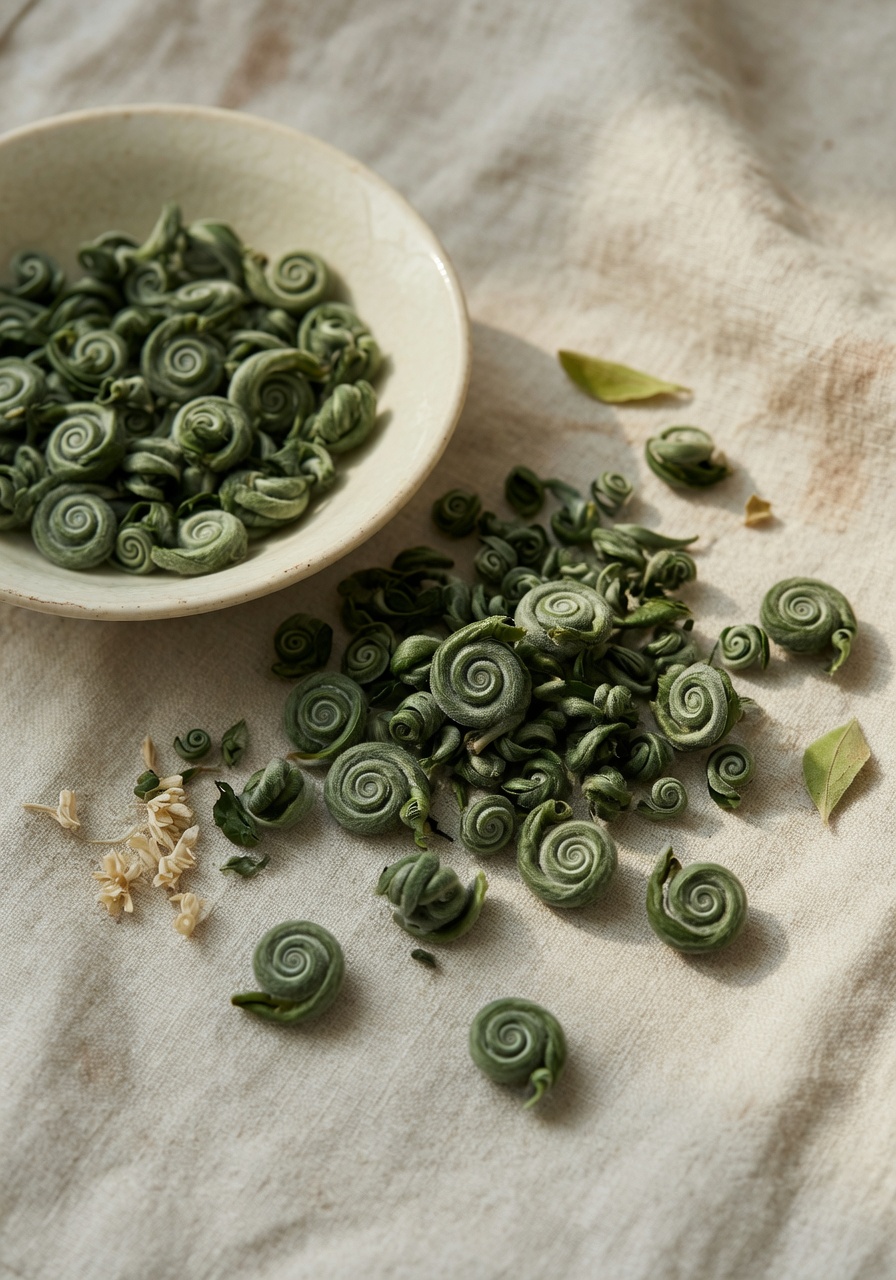
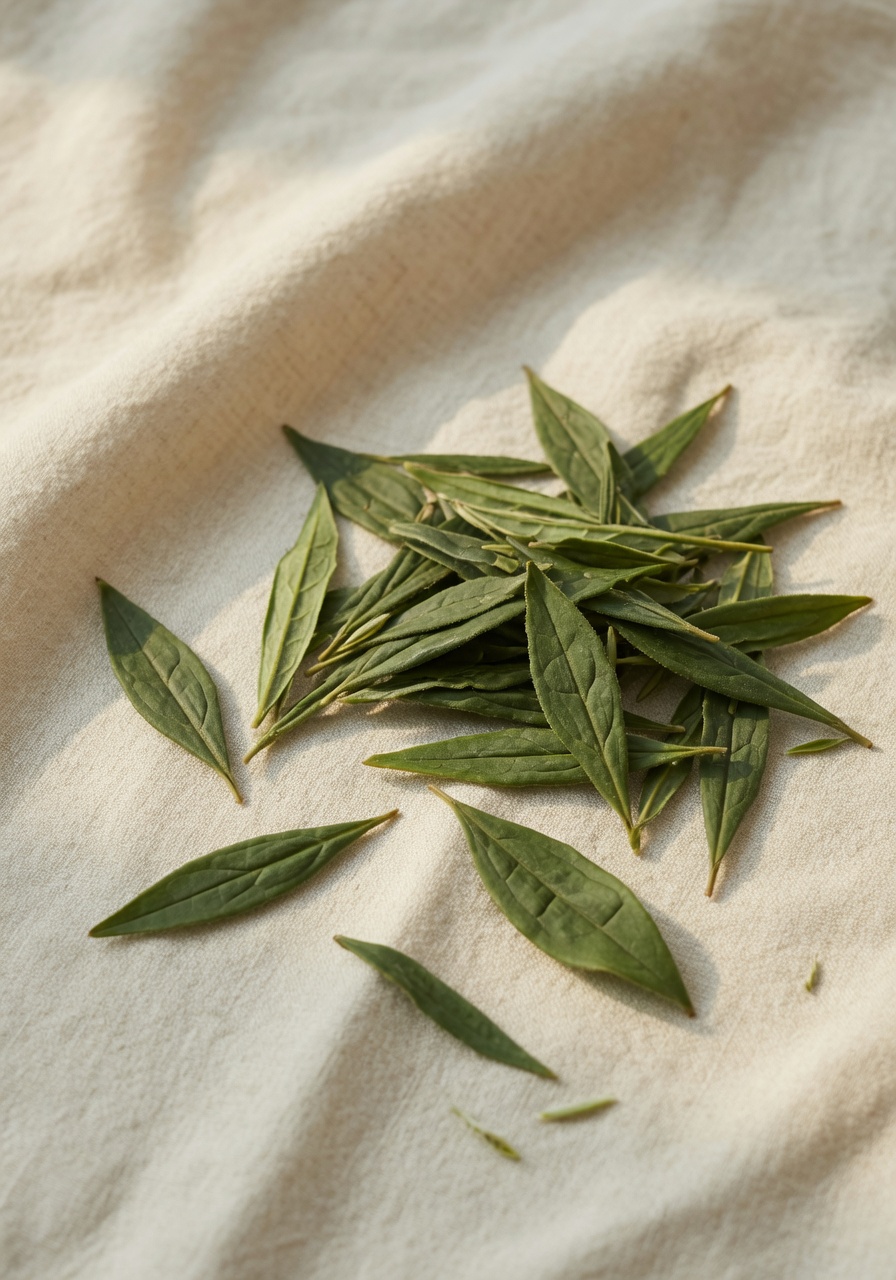
Chinese green tea is unoxidised — the leaf’s enzymes are killed within hours of picking, usually in a hot wok or a steam tunnel, locking in the chlorophyll and the soft amino sweetness of the bud. Everything that follows is sculpting: the flat-press of Lóng Jǐng against the wok wall, the tight curl of Bì Luó Chūn rolled between palms, the downy twist of Máo Fēng shaken loose over charcoal.
Spring is the only window that matters for the top grades. Pre-Qīngmíng pickings (before April 5) are the first tender buds after winter dormancy — concentrated, low in catechin bitterness, high in theanine. Pre-Gǔyǔ (before April 20) is the second window, slightly fuller bodied. After that the leaves coarsen, the sugars drop, and the tea moves into everyday-drinker territory. The samples we offer this quarter are all pre-Qīngmíng 2026, vacuum-sealed within 48 hours of firing and shipped chilled from Guangzhou.
Sensory expectations: chestnut, snap pea, toasted rice, river stone, a faint orchid lift on the second steep. Good green tea is not grassy — that note usually signals under-firing or stale leaf. It should taste like spring vegetables roasted just briefly, with a sweetness that returns to the throat thirty seconds after you swallow. The Chinese call this huí gān — the returning sweet.
Processing matters more than most people are told. Lóng Jǐng is pan-fired in ten distinct hand movements, each shaping the leaf at a different moisture stage. Bì Luó Chūn is rolled while still warm so the white hairs (háo) fuse to the curl. These are not interchangeable techniques — they are the reason the same cultivar tastes different from one valley to the next. For the full processing taxonomy, the encyclopedia entry at thetea.app/green covers each step with diagrams, and tea.school runs a four-session green tea fundamentals course every March.
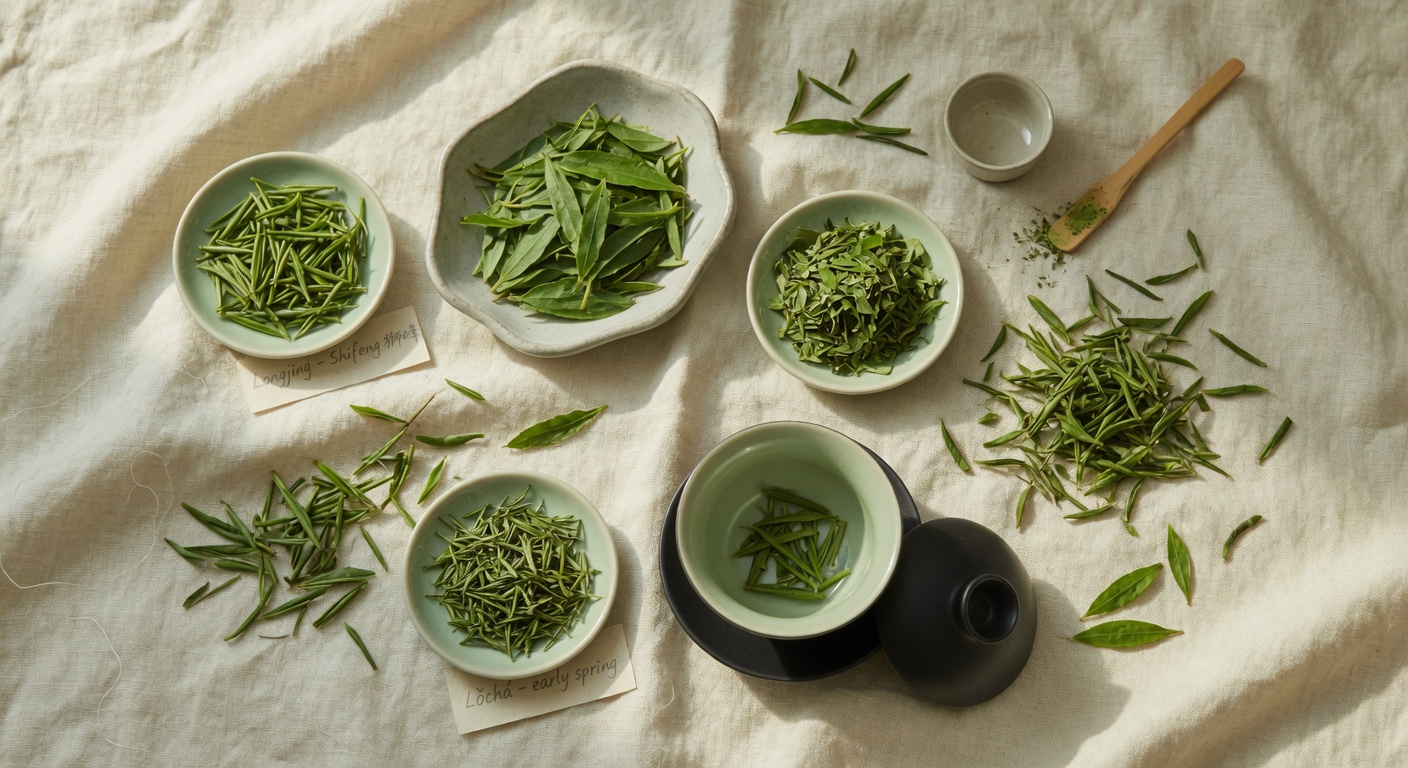
This quarter’s green samples
Two pre-Qīngmíng 2026 lots. Five grams each — enough for one careful gongfu session or two western brews.