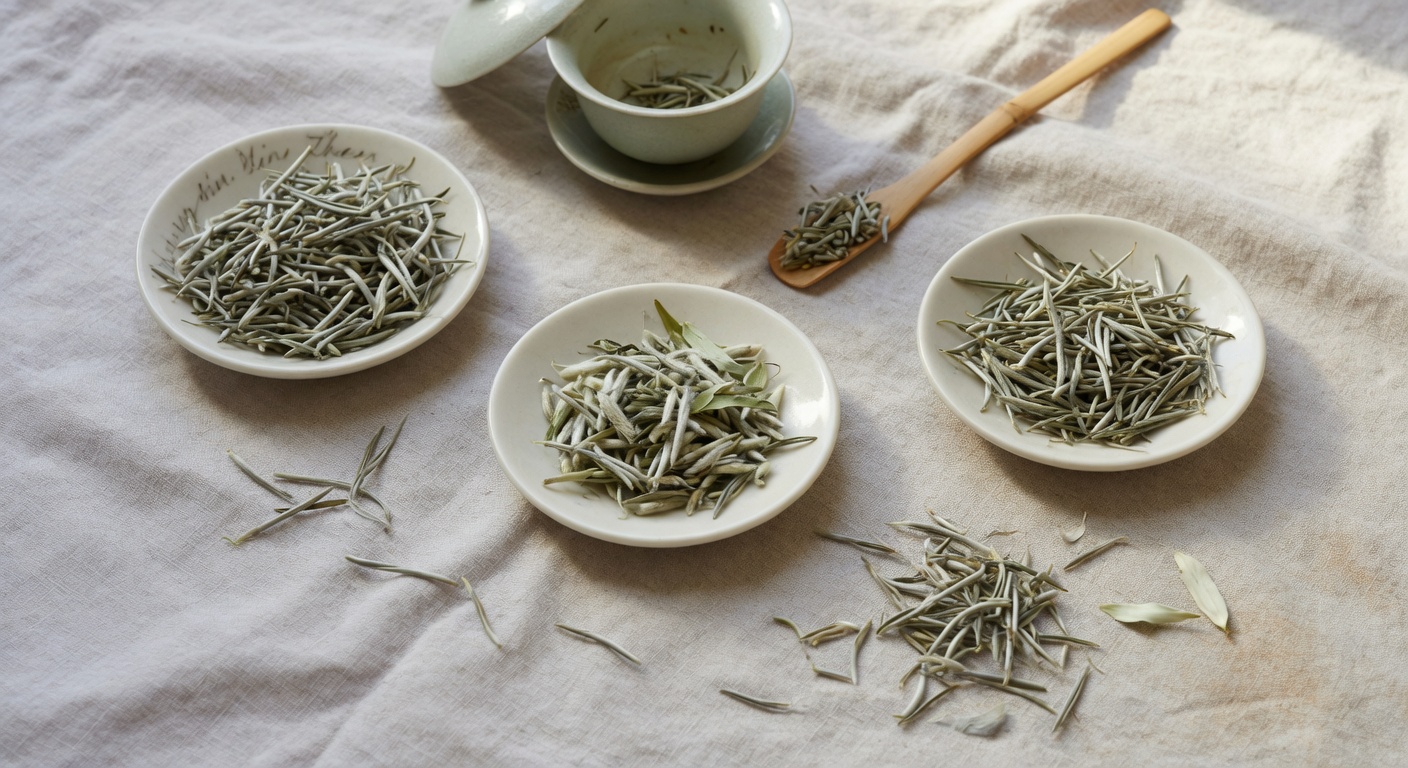
Why Fuding, why spring, why so little processing
Báichá (白茶) is the least-handled of the six tea families. Pluck, wither, dry — that is the entire recipe. Because nothing intervenes between leaf and cup, the garden speaks plainly: soil, altitude, weather during the wither, and the patience of the maker.
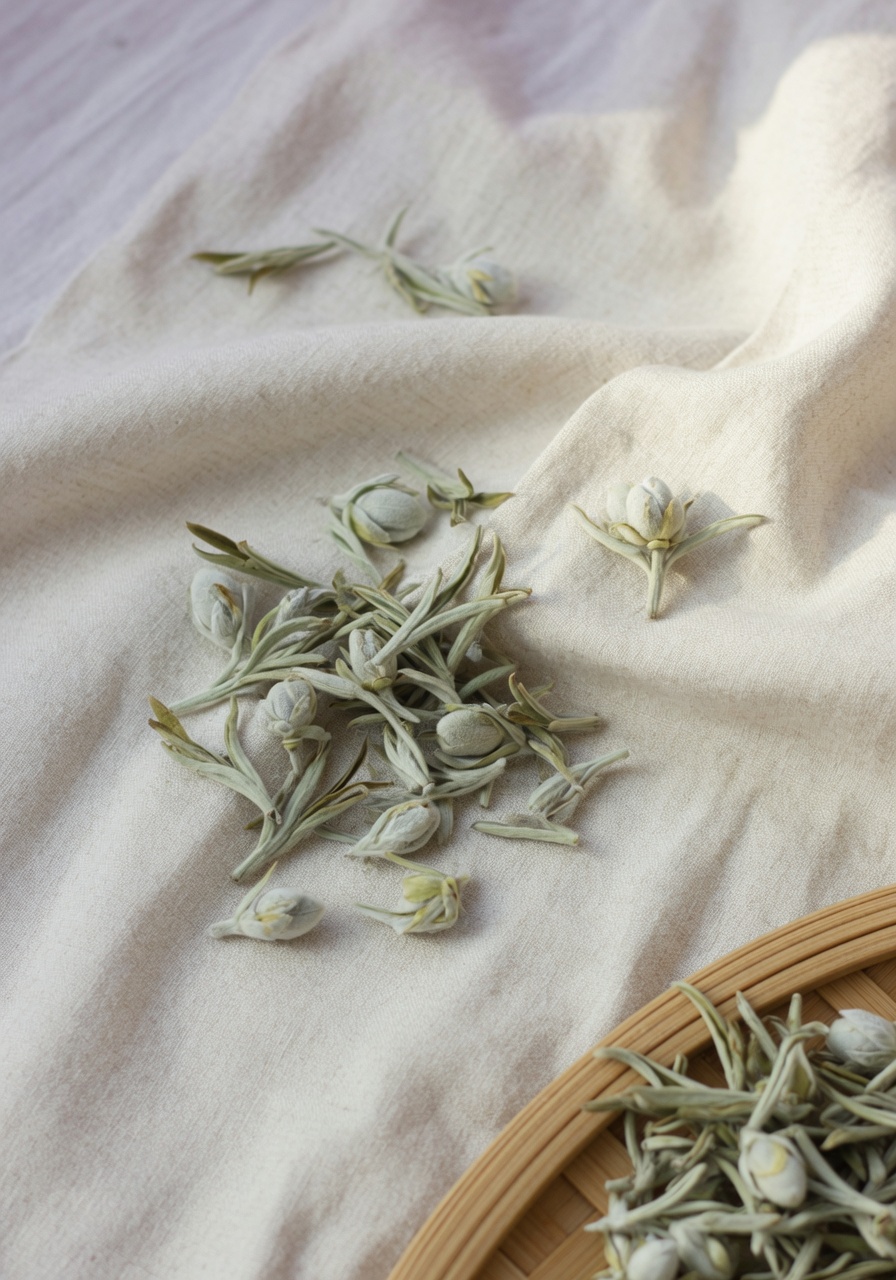
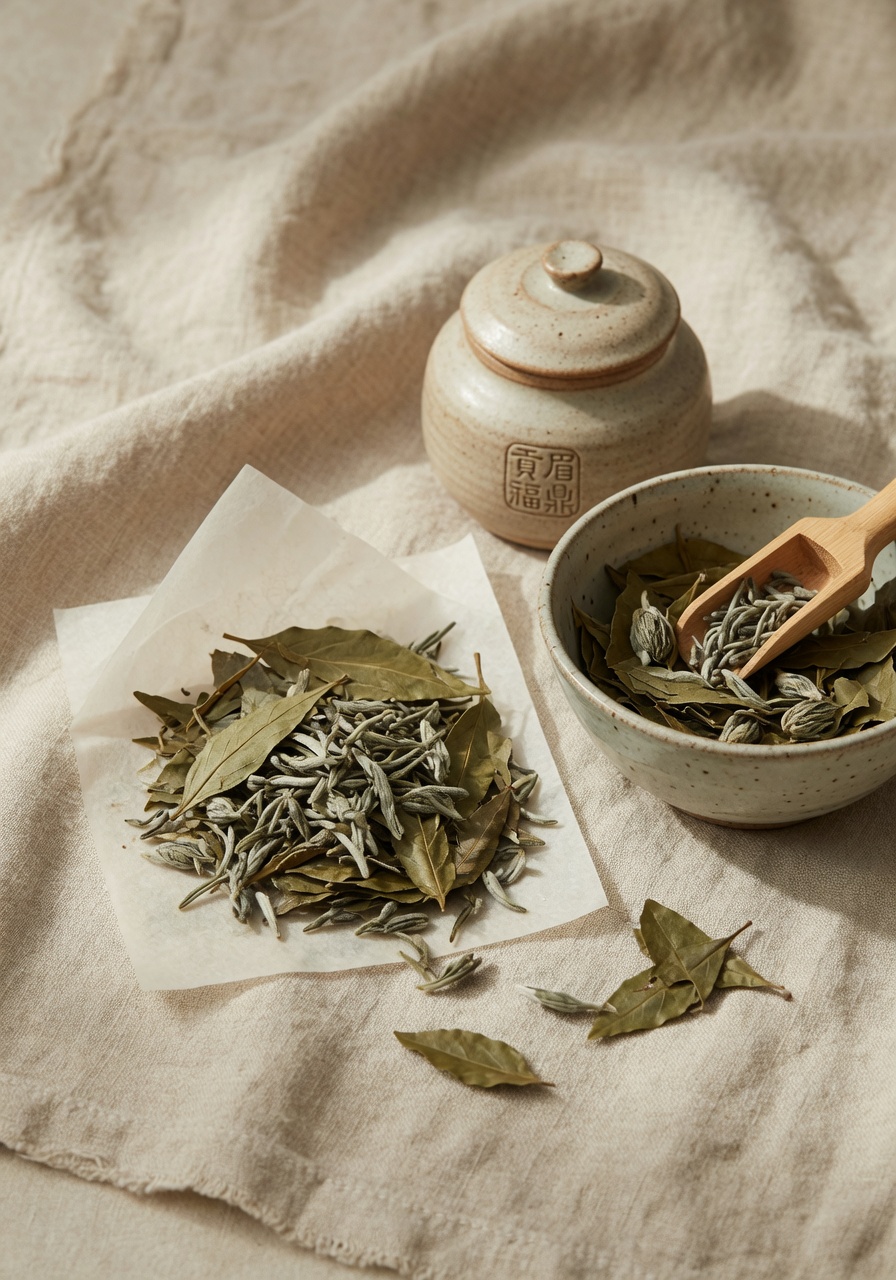
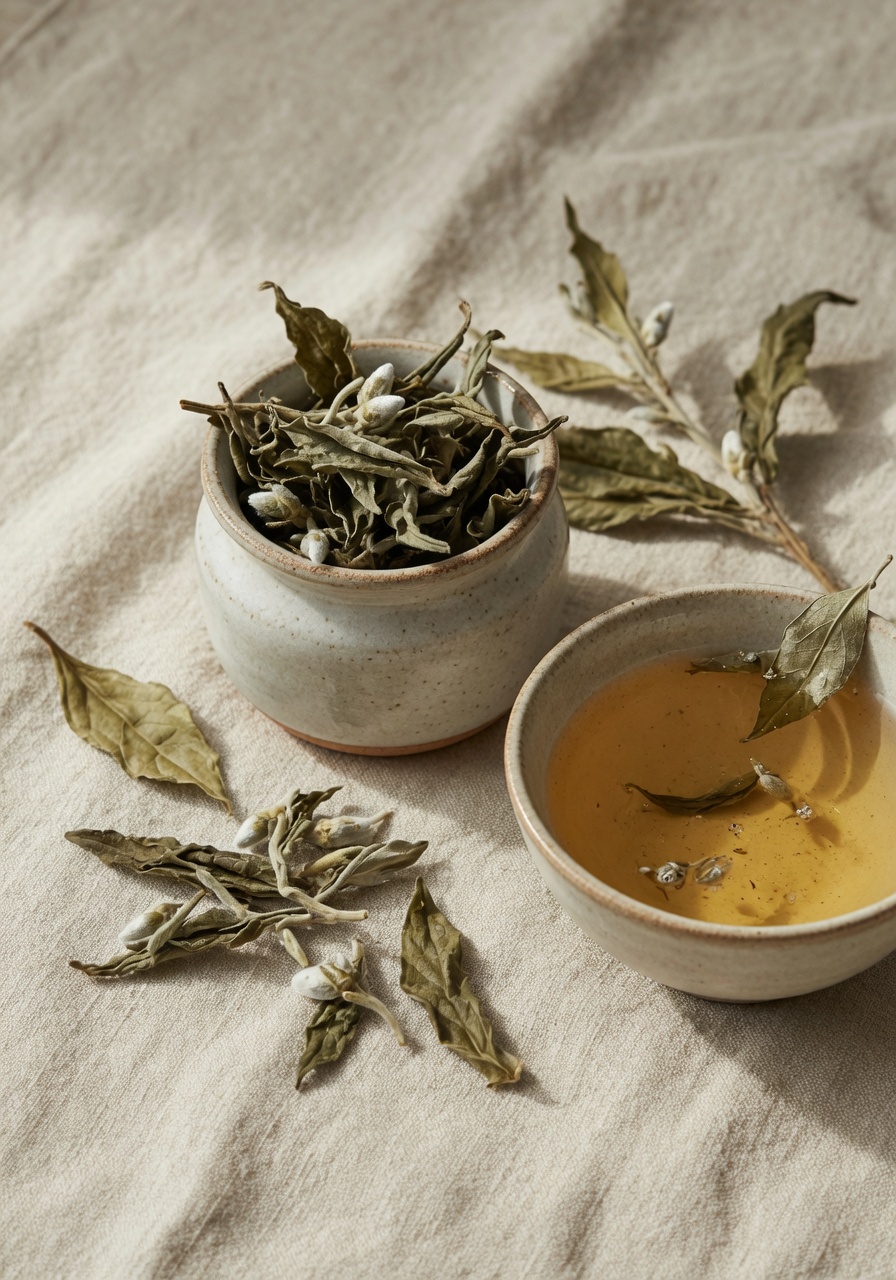
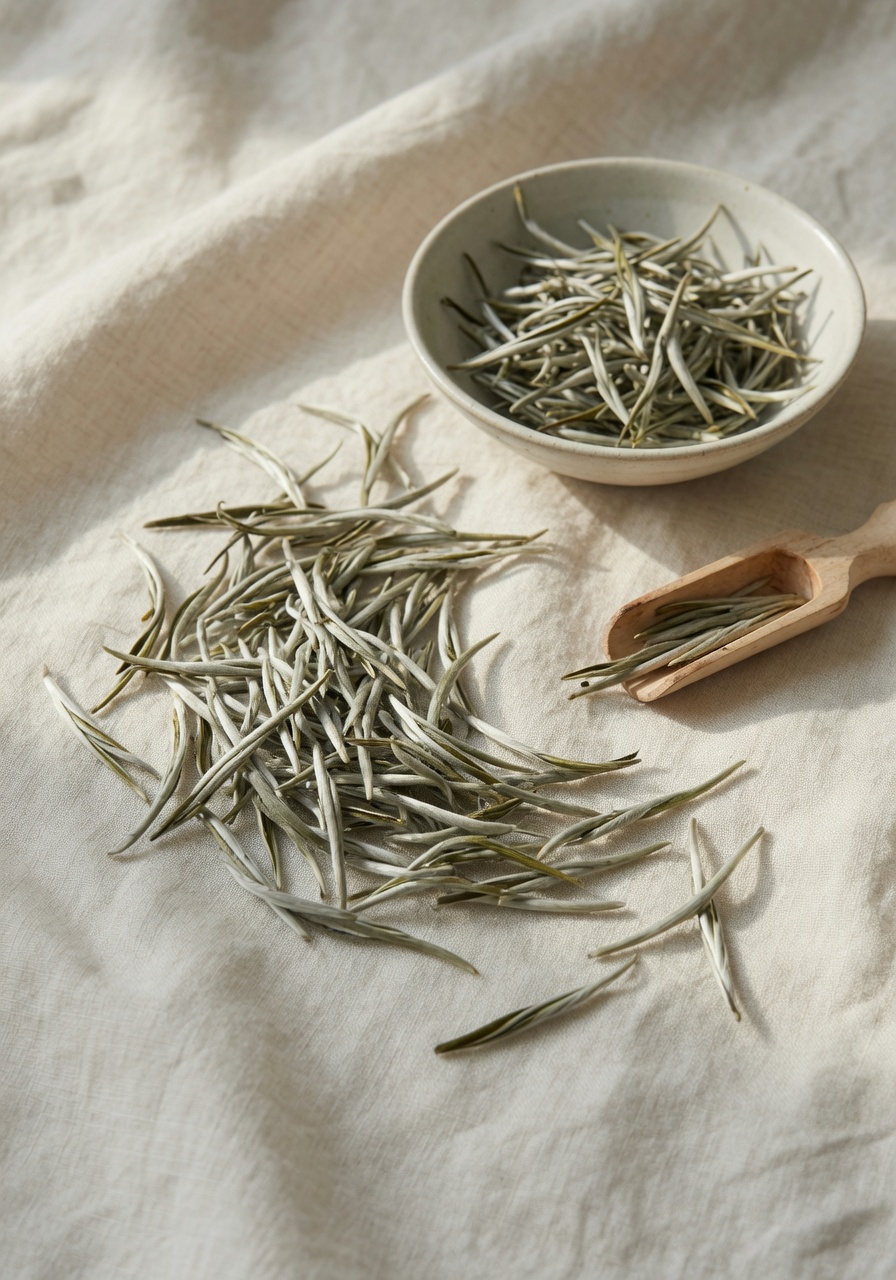
Fuding sits on the northeastern coast of Fujian, where sea fog rolls inland over granite hills and the Fúdǐng Dà Bái (福鼎大白) cultivar — large-leaf, downy, slow-budding — has been cultivated since the 19th century. The county’s spring harvest runs from late March through Gǔ Yǔ (谷雨, Grain Rain) in mid-April. The first flush gives Silver Needle: only the unopened bud, covered in pekoe down so dense the leaves look frosted. As the season progresses and the bud opens to one and then two leaves, the same bush yields Bai Mu Dan, then Gong Mei, then Shou Mei from the larger later leaves. One cultivar, one hillside, four teas — staged by what the plant is doing that week.
Processing sounds simple and is not. The withering happens outdoors on bamboo trays, sometimes for 48 to 72 hours, with the maker reading humidity, sun angle, and leaf colour by the hour. Too much sun and the buds redden; too little airflow and they stew. A finished Silver Needle should be silver-green, still showing live pekoe, with a clean hay-and-melon aroma and no grassiness.
In the cup, spring whites are low-tannin, high-aromatic, and forgiving. The bud teas (Silver Needle, Bai Mu Dan) are floral and cucumber-cool. The leaf-heavier grades (Gong Mei, Shou Mei) carry more body, baked-fruit sweetness, and age beautifully — many drinkers cellar Shou Mei specifically to drink at five, seven, ten years old. If you want the long version of this story, the white tea entry on thetea.app and the white tea processing module on tea.school both go deeper into wither curves and grade hierarchy.
This quarter’s four samples
All four grades from one Fuding garden, one harvest week — taste them side by side and the cultivar’s logic becomes obvious.