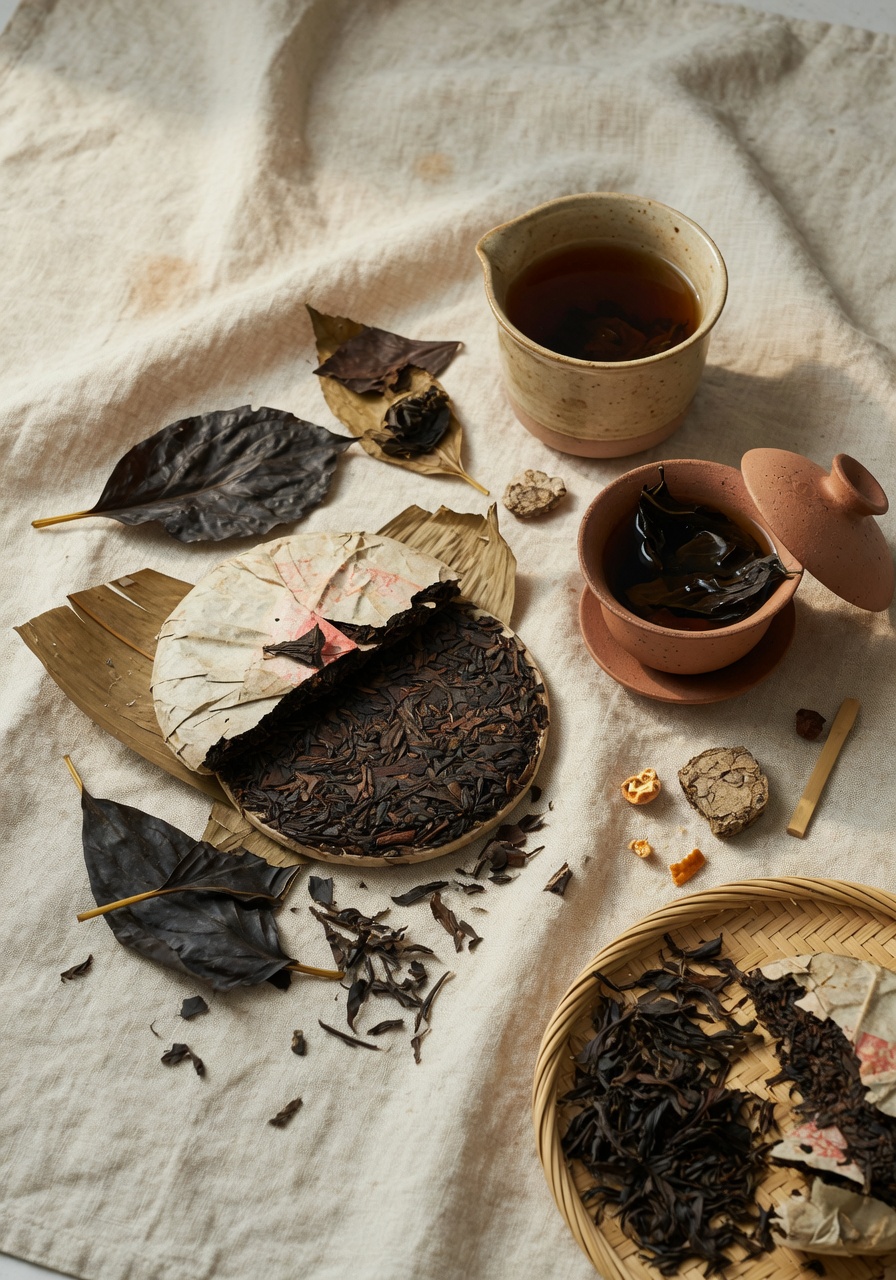
Wuzhou baskets, six years quiet
Wuzhou sits where the Xun and Gui rivers meet in eastern Guangxi — historically the loading point for liu bao shipped down to Guangzhou and onward to tin miners in Malaya. The style was built for that journey: pressed into bamboo baskets lined with leaves, fermented in pile, then left to breathe in humid warehouses until the rough edges fell away.
Fang Ting selected this lot in late 2023, after tasting through nine baskets from a small Wuzhou cooperative that still ages on wooden racks rather than climate-controlled rooms. The 2018 spring material had been piled lightly — a shorter wò duī than most commercial liu bao — which kept the leaf legible and let the resting years do the heavier work. By the time it reached her cupping table it had cleared the wet-pile note entirely and moved into the betel-nut and aged-cedar register that defines a properly settled Wuzhou tea.
Her background is in Henan oolong and pu-erh, and she approaches liu bao as its own category rather than a pu-erh cousin. “Liu bao asks for patience on the brewer’s side, not the drinker’s,” she notes in her tasting log — meaning the rinse and the first two steeps reveal little, but from the third the tea opens steadily and holds for an hour.
We broke a single basket into 5g samples so first-time hēichá drinkers can meet the style without committing to a whole cake or tong. The remainder of the basket lives at shop.puerh.app under Fang Ting’s selection.