A Henan palate that learned to read the south
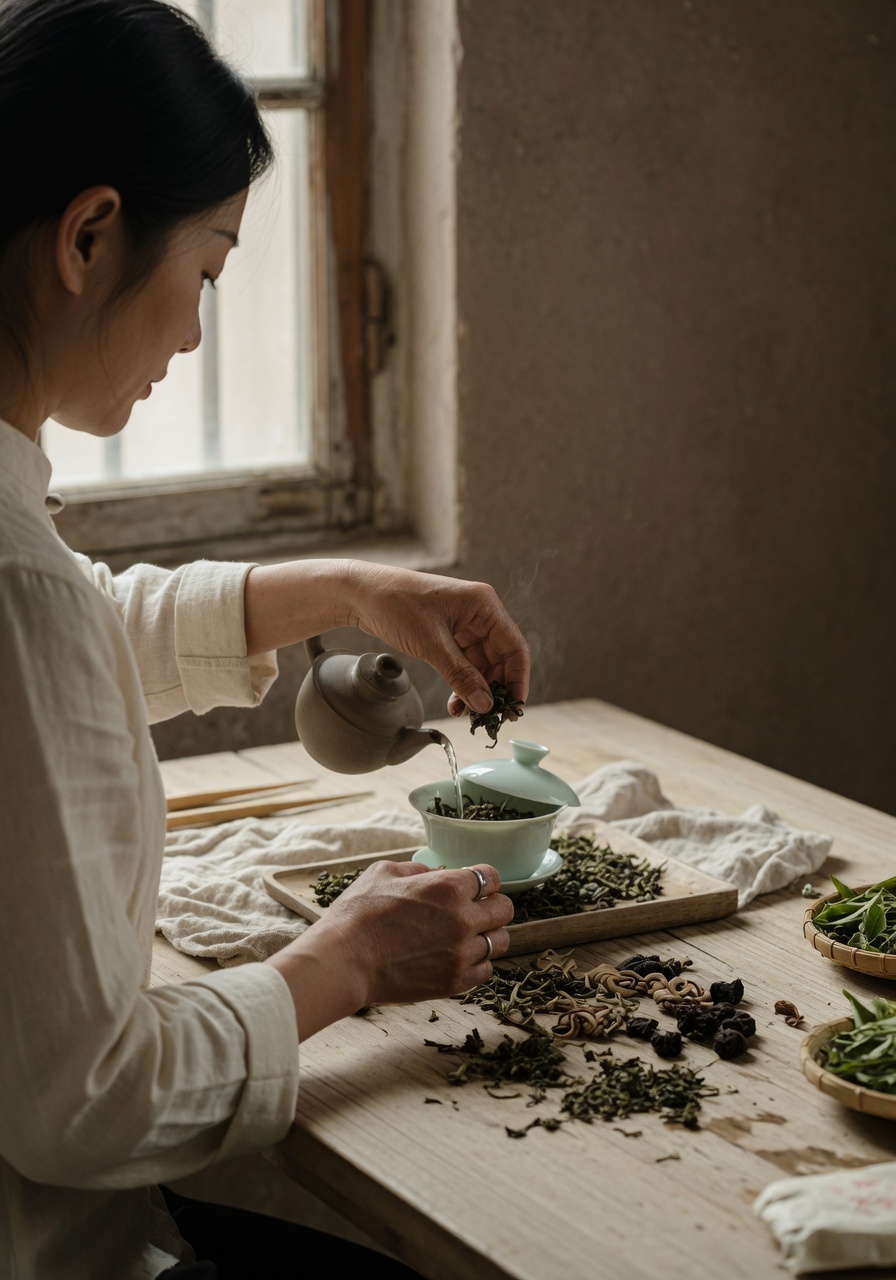
Fang Ting came to tea the way many northerners do — through a thermos. Her grandfather kept a tall glass flask of pan-fried Xinyang green on his desk in Henan, refilled at intervals that mapped to the working day rather than to any tea-master’s clock. The leaves were ordinary. The ritual was not. By the time she was a teenager she was the one warming his cup, and by the time she finished school she had begun to suspect that what looked like one tea was actually a country’s worth of teas wearing the same name.
Her formal training began with green and oolong — the two categories most accessible from a Henan base, since Xìn Yáng Máo Jiān (信阳毛尖) grew on her doorstep and the long rail line south brought Tiě Guān Yīn (铁观音) and Wǔ Yí Yán Chá (武夷岩茶) within a weekend’s reach. She apprenticed under cuppers in Anxi for two seasons, then in Wuyishan for a third, learning to read roast levels the way a baker reads crust. Oolong taught her structure. Green tea taught her honesty — a single sloppy fix-step is impossible to hide.
Pu-erh came later, and almost by accident. A mentor in Guangdong sent her a sleeve of late-1990s sheng to taste blind, alongside a young 2010 cake from the same mountain. The 12-year gap inside one mountain rewired how she thought about tea. She spent the next four years working between Wuzhou and Menghai — Liu Bao on one side, shou and sheng on the other — and never quite went back to a single-category practice. Today she sits across all three of her core specialties and treats them as one conversation: how a leaf changes when you withhold heat, when you apply it, when you let time do the work instead.
At Teamotea she is the senior expert behind oolong and pu-erh selection on shop.thetea.app and shop.puerh.app, an author on puerh.app and tea.doctor, and the instructor for the oolong and intro pu-erh paths at tea.school. Her tea.gratis catalog is small on purpose — two dark-tea samples drawn from her field notebooks in Wuzhou and Menghai. She picks them not because they are her flagships but because they are the teas she most wishes a beginner could taste before forming opinions.
What carries across all of this is a northern habit of plain speech. Fang Ting will tell you a wet-pile shou tastes like wet pile in its first two years, and that this is not a flaw but a stage. She will tell you that the difference between a good Liù Bǎo (六堡) and a forgettable one is often a basket, a cave, and twenty years of patience. She trusts students to handle honesty, and she trusts samples to do the convincing.
Wuzhou baskets, Menghai piles — two dark-tea worlds
Fang Ting’s gratis selections come from two distinct dark-tea geographies, neither of them her home region. That distance is the point — she chose them because each clarifies the other.
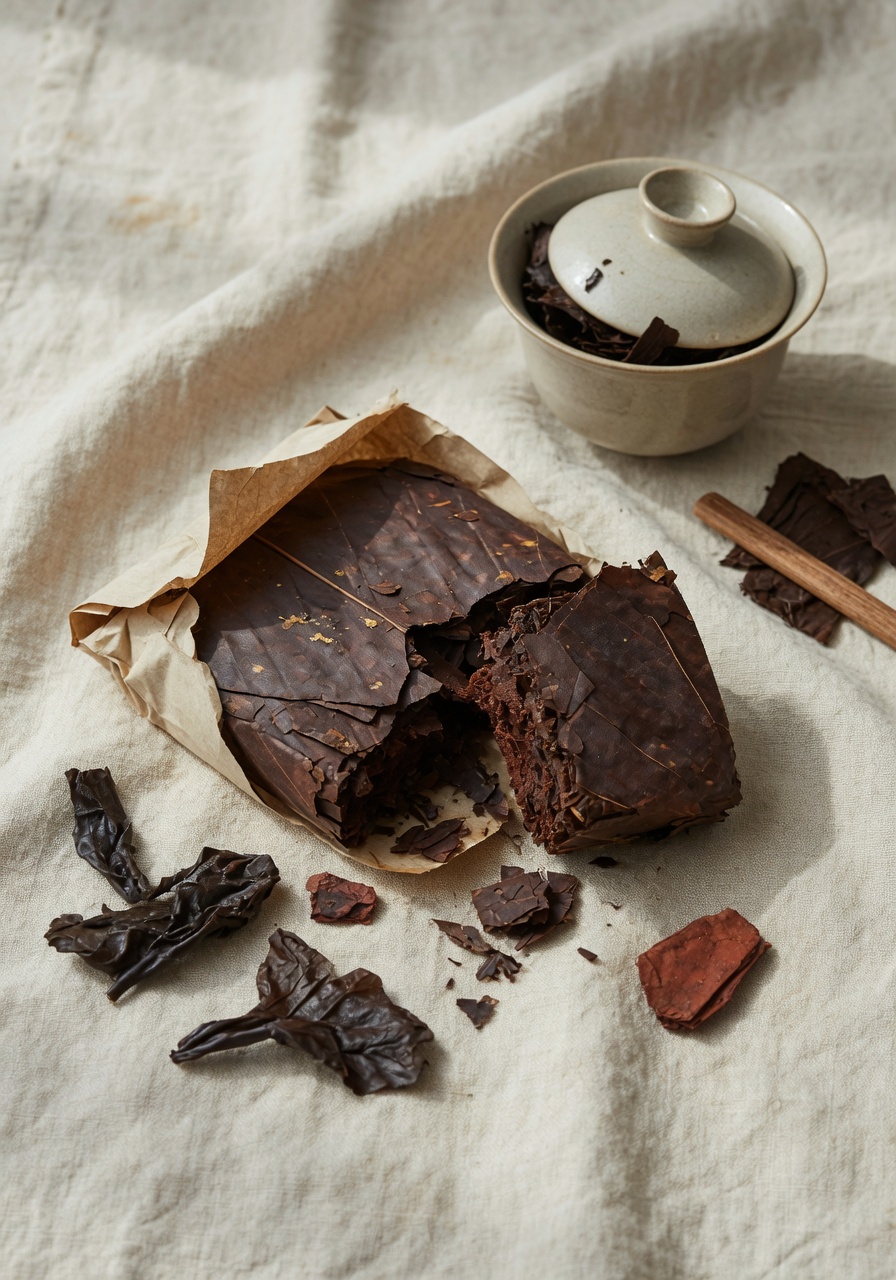
Wuzhou sits in eastern Guangxi, where the Xun, Gui and Xi rivers braid together before flowing toward Guangdong. Liù Bǎo (六堡) was historically a workers’ tea — pressed into long bamboo baskets, floated down those rivers, and aged in damp limestone caves on its way to Southeast Asian tin mines. The terroir is humid, subtropical and shaded; the cultivars are local large-leaf varietals; the post-fermentation is slow and basket-bound, which gives finished Liu Bao its quiet betel-nut sweetness and the cool, mineral finish that distinguishes it from Yunnan dark teas. Fang Ting works with a single cooperative outside Wuzhou city that still ages in stone-walled rooms rather than climate-controlled warehouses.
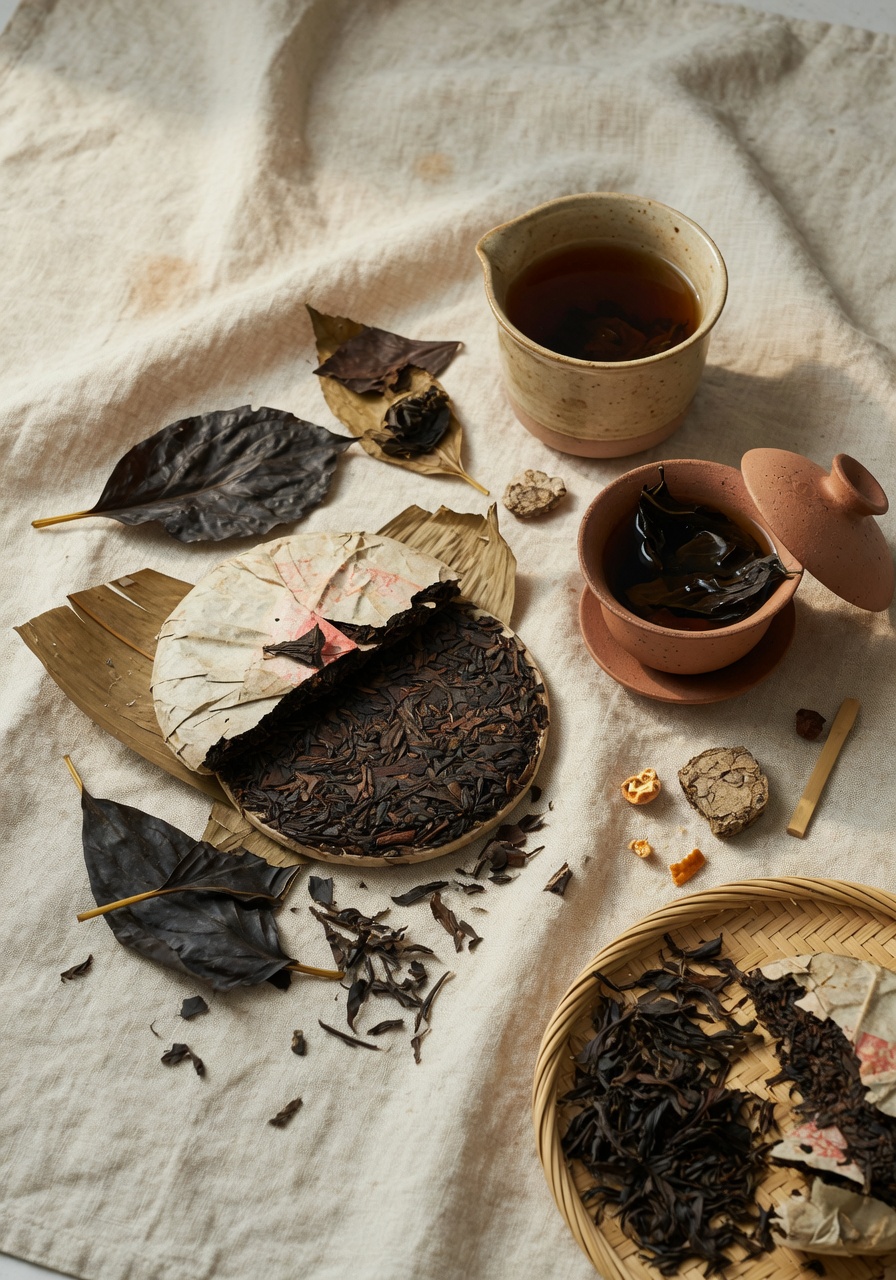
Menghai, in southern Xishuangbanna, is the textbook capital of shou pu-erh. The wò duī (渥堆) wet-pile fermentation method was codified at the Menghai Tea Factory in the 1970s, and the surrounding climate — high humidity, warm year-round, microbially generous — remains difficult to replicate elsewhere. Her 2019 shou comes from a small workshop run by a former Menghai factory technician, blended from old-tree material in the Bulang foothills and piled for roughly forty-five days. Side by side with the Liu Bao, it teaches what fermentation means in tea: same family, different dialects, both shaped by water and time more than by fire.