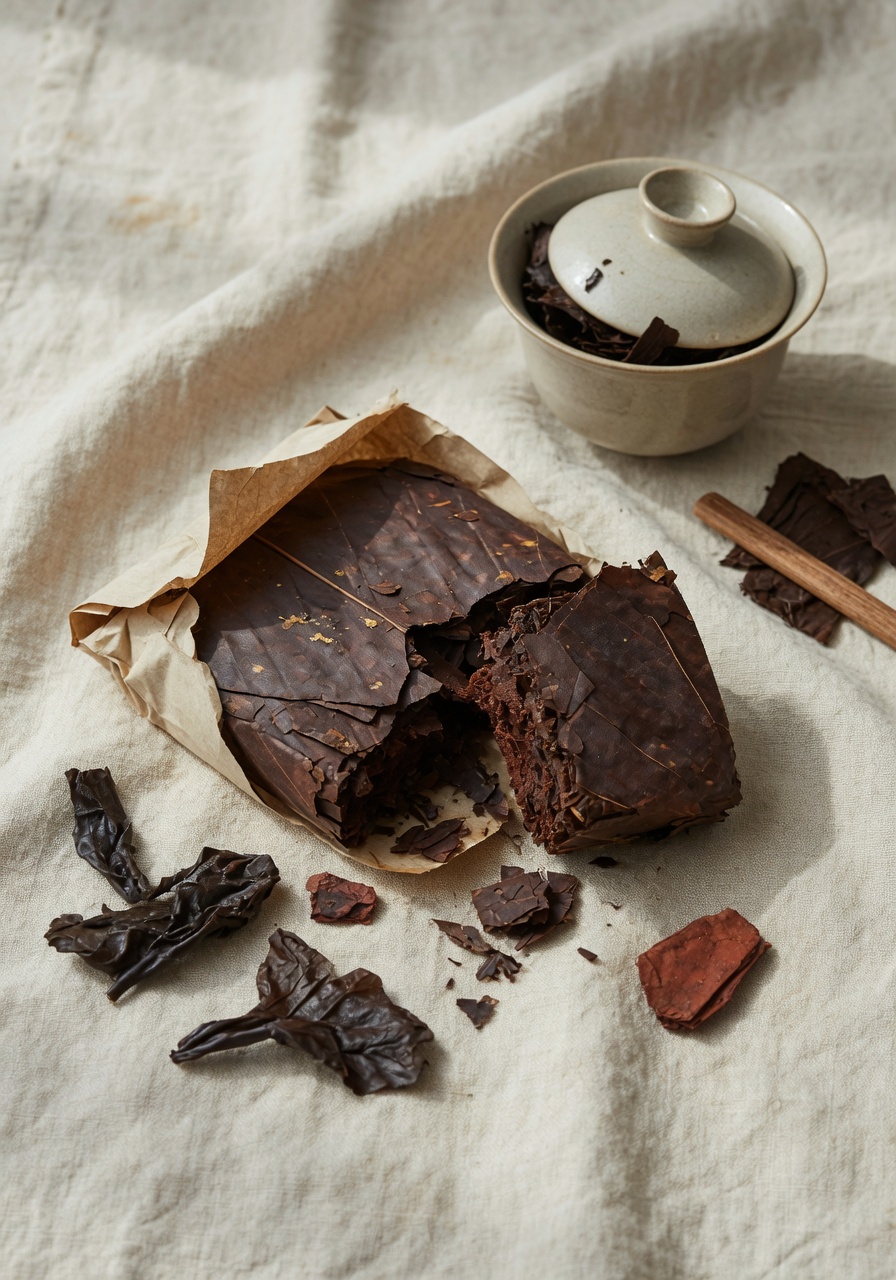
This lot was tasted in spring 2024 during a sourcing trip through Xishuangbanna, after a long week of cupping much younger shu in Kunming warehouses. It came off one shelf in a small Menghai storeroom — loose-leaf shu from a 2019 wò dūi batch. The pile had been a clean one: forty-five days, moderate temperature, no over-fermented funk. What decided it was what five years of warehouse rest had done to the tea. The wet-pile note that defines fresh shu — that pondy, sometimes fishy edge — had quietly walked off. What remained was wood, dried fruit, and a low mineral sweetness closer to an older shou bīng than to anything fresh off the pile. This is the tea to pour for anyone who says they ‘don’t like pu-erh’ — usually because the only shu they have met was three months out of the pile. We took a small portion of the lot specifically for the gratis program: 5g per sampler, enough for one honest gongfu session, no commitment.
The leaf, brewed
Settled wet-pile, no edge left — clean wood and date sweetness.
dry leaf
Dark chestnut-brown fragments, tight twist, faint cocoa and damp cedar on the dry warm pot.
wet leaf
After rinse — wet bark, baked sweet potato, a quiet earthiness with none of the early-shu fishiness.
liquor
Deep mahogany pouring to garnet at the rim, fully clear, oily meniscus by the third steep.
aroma
Dried longan, old library wood, a thread of camphor in the empty cup once it cools.
taste
Smooth body, no astringency. Dried date and bittersweet cocoa up front, mineral pond-floor in the middle, faint glutinous-rice sweetness underneath.
finish
Long, warming, settles low in the chest. Mild huígān returning as cool sweetness on the tongue plate.
Brewing
A method, not a recipe.
Method
gongfu
Ratio
5g / 100ml
Water temp
100°C
First infusion
Two quick rinses (5s each, discard), then 10s first pour
Subsequent
8–10 steeps; add 5s per infusion after the fourth, push to 60s by steep 8
Use a seasoned clay pot if you have one — porcelain works but reads thinner. The full 5g sample is one complete gongfu session for two cups.
If this becomes your daily leaf
This 5g sample is a taste, not a supply. The full tin lives at shop.puerh.app.