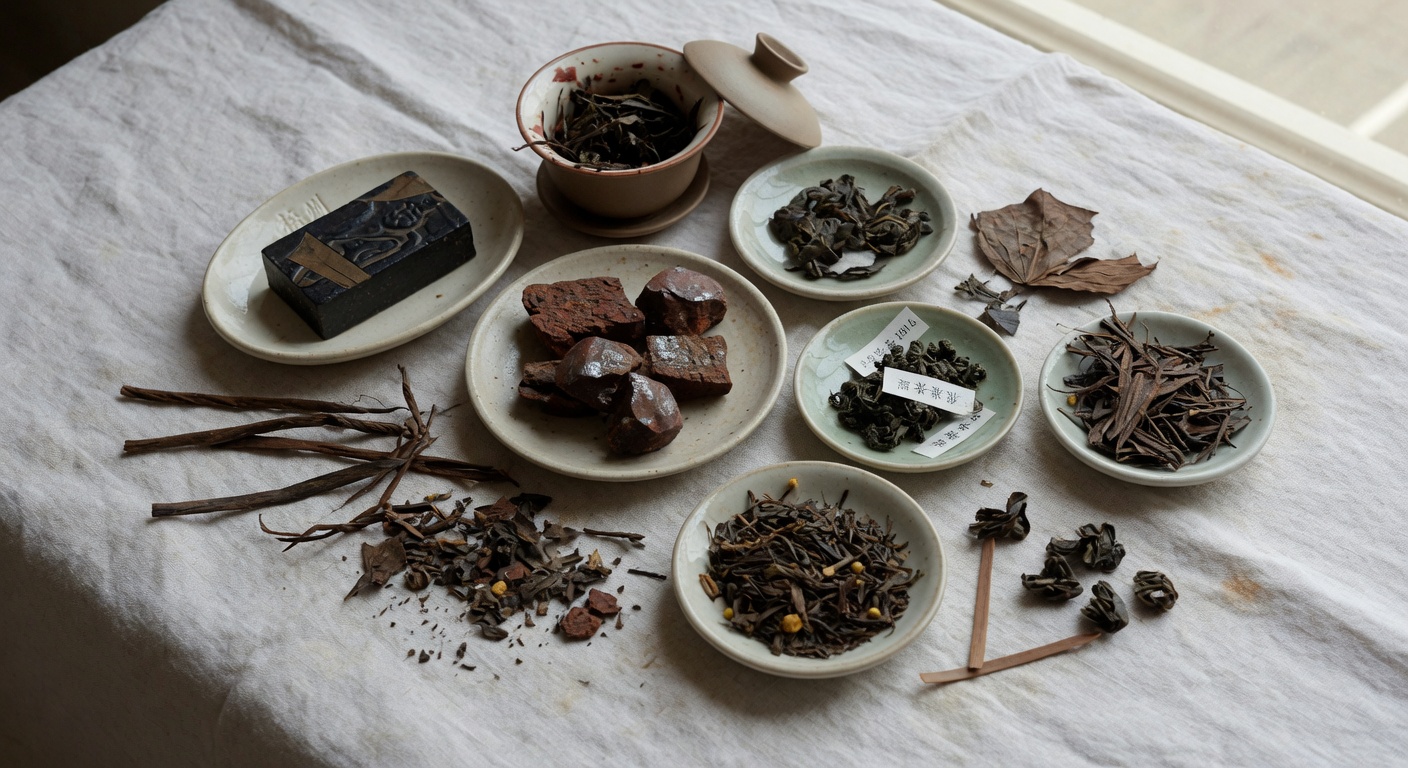
tea.gratis · sampling channel Encyclopedia · School · Atlas · Pu-erh · Equipment EN · RU · · · FR · ES · AR
tea.gratis Cart (0)

home · catalog

Dark tea

Aged earth in five-gram portions

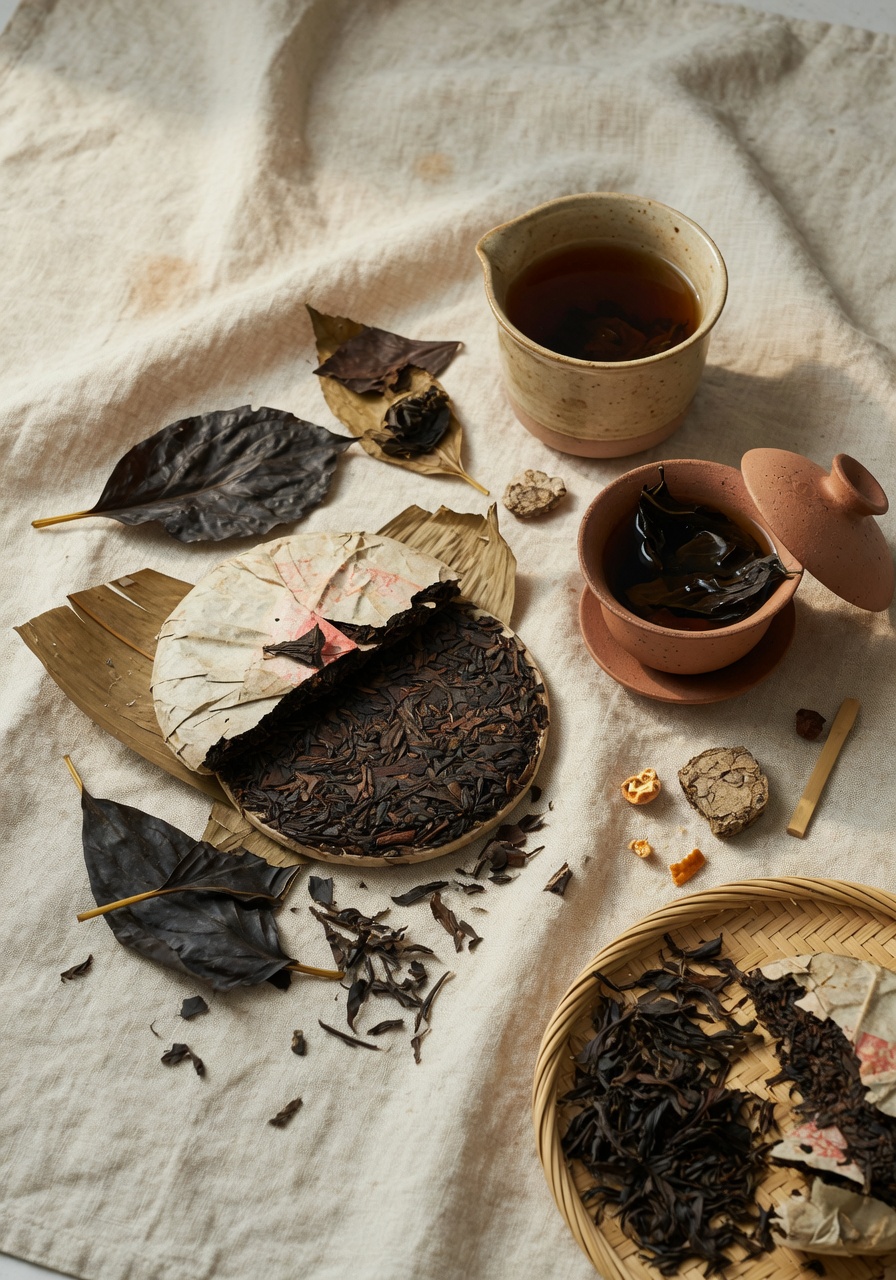
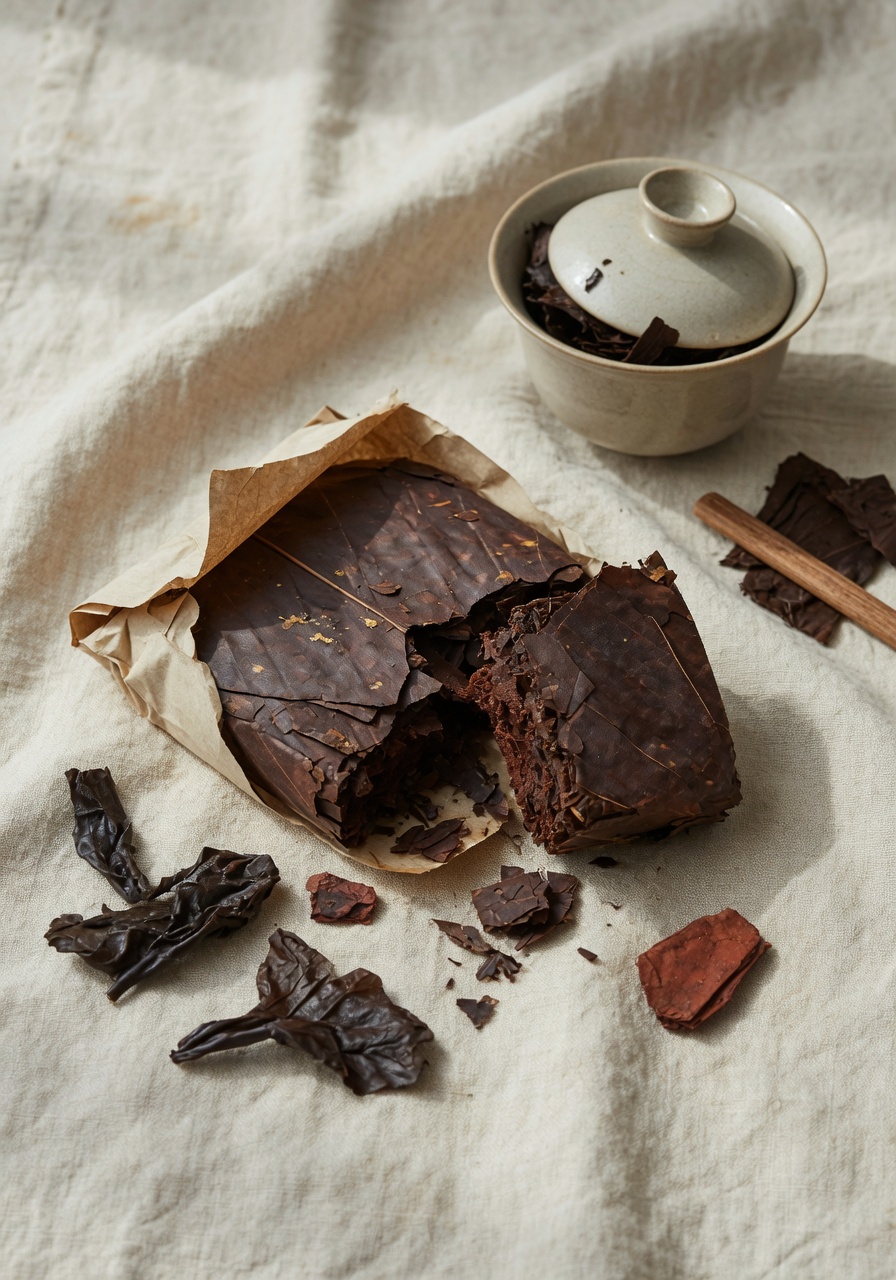
Q1 dark tea samples — a Wuzhou *Liù Bǎo* (六堡) basket-aged six years, and a Menghai *shú pǔ'ěr* (熟普洱) from the 2019 wet-pile. Two 5g sleeves, one quiet flight through the wetter, deeper end of the Chinese tea map. Free sample, paid shipping.

Dark tea

What dark tea is, and why post-fermentation matters

Dark tea — hēichá (黑茶) — is the family of Chinese teas that finish their transformation after the kill-green and rolling steps, through microbial post-fermentation. This is a different process from oxidation (which makes black tea) and a different process again from natural ageing (which makes raw shēng pǔ’ěr slowly turn). In dark tea, fungi and bacteria are invited in, deliberately, and the leaf is allowed to compost in a controlled way until its rough green edges round into something soft, sweet and woody.

The two great families inside hēichá are Wuzhou’s Liù Bǎo from Guangxi and Yunnan’s shú pǔ’ěr. Liù Bǎo is traditionally pressed into bamboo-lined baskets and aged in cool caves and warehouses near the West River; the climate humidity is part of the recipe. Shú pǔ’ěr is younger as a category — the wò duī (渥堆) wet-pile technique was formalised in Kunming in 1973 — and it accelerates, in roughly 45 to 60 days, what shēng would take decades to do. Both teas reward patience after processing too: a few years of rest soften any residual pile-flavour into clean date, betel-nut and damp-forest notes.

Picking for dark tea is broad. Unlike green or white tea, which prize the bud, hēichá uses mature leaves — often three or four to a stem, sometimes including the woody stalk — because the post-fermentation needs that body to feed on. Spring and summer pickings both qualify; what matters more is the cultivar, the elevation, and the warehouse the tea will sleep in.

In the cup, expect deep mahogany liquor, almost no astringency, a thick swallowing texture, and a finish that lingers as cocoa, wet stone, camphor or red dates depending on the lot. These are teas to drink slowly, after food, in cooler weather. For the longer story — wet-pile history, basket-ageing, the jīn huā (金花) golden-flower bloom — see the dark-tea chapters on thetea.app and the post-fermentation module on tea.school.

Two 5g sleeves in this quarter’s box

One basket-aged Liù Bǎo from Wuzhou, one Menghai shú pǔ’ěr from 2019. Brew them back-to-back to feel the difference between cave-aged and pile-fermented dark tea.
A buyer's note

How to get the most from a 5g sleeve

Rinse the leaf first

Pour boiling water over the tea, count to five, discard. Dark tea has been resting; this wash wakes the leaf and clears any cellar dust before the first real infusion.

Brew at full boil

Dark tea needs 100 °C. Cooler water leaves it muddy and flat. A small gaiwan or 100 ml clay pot works; 5g fills either comfortably for six to ten short infusions.

Short steeps, then stretch

Start at 8–10 seconds after the rinse, adding 5 seconds per round. By the sixth infusion you can pour a longer one-minute steep to draw out the sweet tail.

Smell the wet leaf

Lift the gaiwan lid between steeps. Good *Liù Bǎo* smells of betel-nut and pine; clean *shú* smells of cocoa and forest floor — never of pond water or mould.

Store the rest dry and odour-free

If you open a sleeve and don't finish it, fold the kraft tight and keep it away from spices and coffee. Dark tea will absorb whatever is next to it within days.

Drink after food, not before

Dark tea is built for digestion. Pair it with a heavy meal — dim sum, lamb, aged cheese — and you'll taste its purpose. Empty-stomach drinking can feel rough.

Common questions

Asked, answered.

Is dark tea the same as pu-erh?

*Shú pǔ'ěr* belongs to the dark tea family. *Shēng pǔ'ěr* is technically separate — it ages naturally rather than through wet-piling. See [puerh.app](https://puerh.app) for the full taxonomy.

Will 5g really show me what this tea is?

Yes, for two to three sessions of short gongfu steeps. It's a taste, not a daily supply. If you love a sample, the full cakes live at [shop.puerh.app](https://shop.puerh.app).

How old is the *Liù Bǎo* in this box?

Pressed in 2018, basket-aged in Wuzhou ever since. Six years is young by *Liù Bǎo* standards but enough to show clean betel-nut and aged-wood character.

Does dark tea contain caffeine?

Yes, roughly comparable to black tea, though the long post-fermentation softens its edge. Most drinkers find it less stimulating in feel, even if the lab numbers are similar.

Why does my *shú pǔ'ěr* taste a bit fishy at first?

Residual pile aroma from young *shú*. The rinse step removes most of it; a year or two of additional rest erases the rest. Our 2019 lot is already past that stage.

Can I cold-brew these samples?

You can, but it's not their best form. Dark tea is built for heat. If you want cold-brew samples, look at our summer green and white box on [tea.gratis](https://tea.gratis).

How long can I keep an unopened sleeve?

Indefinitely, if stored cool, dry and away from strong smells. Dark tea gets better with rest — a sleeve forgotten for two years will likely taste rounder than today.

Do you ship internationally?

Yes, with shipping cost shown upfront before checkout. See the shipping page for regions and rates. One sample box per household per quarter.