tea.gratis · sampling channel Encyclopedia · School · Atlas · Pu-erh · Equipment EN · RU · · · FR · ES · AR
tea.gratis Cart (0)

home · catalog

Té oscuro

Tierra envejecida en porciones de cinco gramos

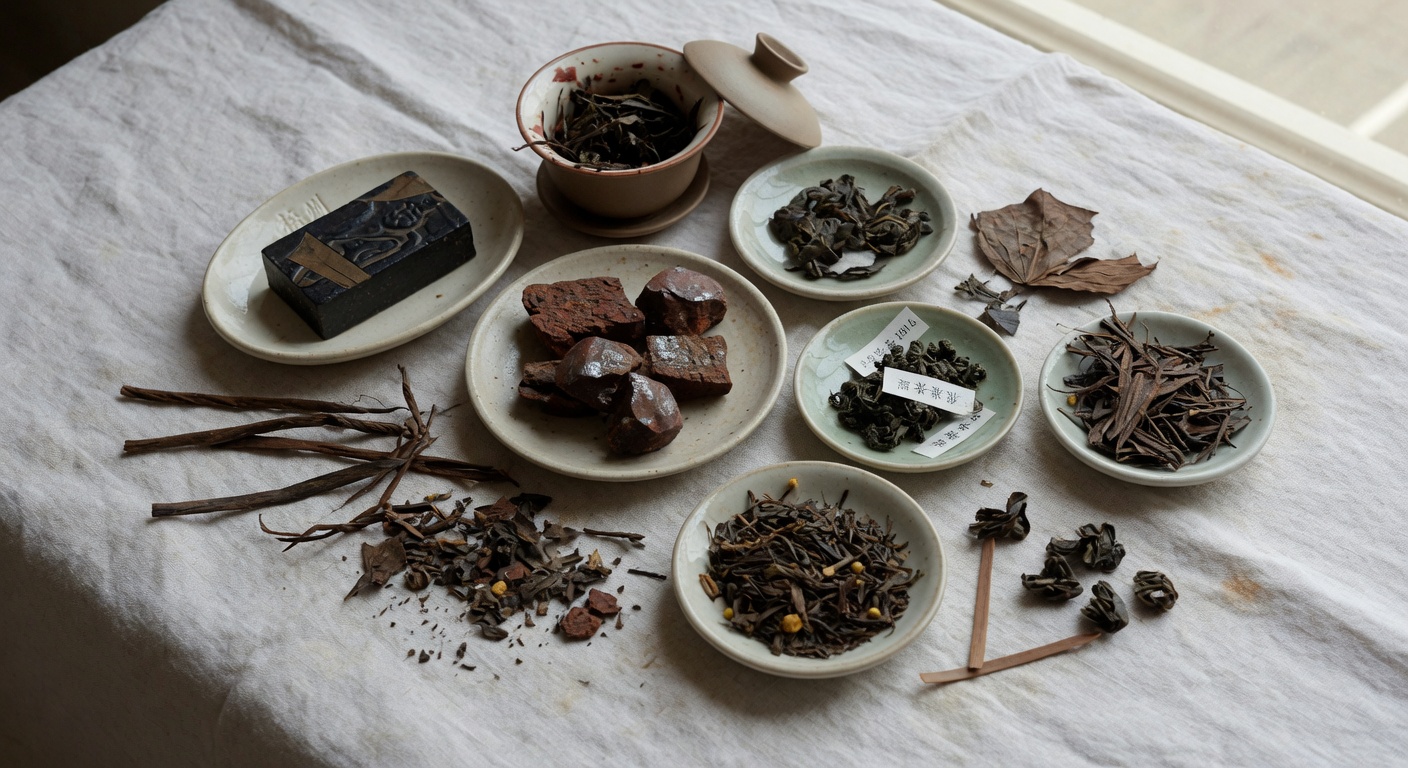
Muestras de té oscuro del primer trimestre: un *Liù Bǎo* (六堡) de Wuzhou envejecido en cesta durante seis años, y un *shú pǔ'ěr* (熟普洱) de Menghai de la pila húmeda de 2019. Dos sobres de 5 g, un vuelo silencioso por el extremo más húmedo y profundo del mapa del té chino. Muestra gratuita, envío de pago.

Té oscuro

Qué es el té oscuro y por qué importa la posfermentación

El té oscuro — hēichá (黑茶) — es la familia de tés chinos que terminan su transformación después de los pasos de fijado del verde y enrollado, mediante una posfermentación microbiana. Este es un proceso diferente de la oxidación (que produce el té negro) y diferente también del envejecimiento natural (que hace que el shēng pǔ’ěr crudo se transforme lentamente). En el té oscuro, se invita deliberadamente a hongos y bacterias, y se permite que la hoja se composte de forma controlada hasta que sus bordes ásperos verdes se redondean en algo suave, dulce y amaderado.

Las dos grandes familias dentro del hēichá son el Liù Bǎo de Wuzhou, de Guangxi, y el shú pǔ’ěr de Yunnan. El Liù Bǎo se prensa tradicionalmente en cestas forradas de bambú y se envejece en cuevas frescas y almacenes cerca del río Oeste; la humedad del clima es parte de la receta. El shú pǔ’ěr es más joven como categoría — la técnica de pila húmeda wò duī (渥堆) se formalizó en Kunming en 1973 — y acelera, en aproximadamente 45 a 60 días, lo que el shēng tardaría décadas en hacer. Ambos tés también recompensan la paciencia tras el procesado: unos años de reposo suavizan cualquier sabor residual a pila en notas limpias de dátil, nuez de betel y bosque húmedo.

La recolección para el té oscuro es amplia. A diferencia del té verde o blanco, que valoran la yema, el hēichá usa hojas maduras — a menudo tres o cuatro por tallo, a veces incluyendo el tallo leñoso — porque la posfermentación necesita ese cuerpo para nutrirse. Tanto las cosechas de primavera como las de verano son válidas; lo que más importa es el cultivar, la altitud y el almacén donde el té dormirá.

En la taza, espere un licor de caoba profundo, casi sin astringencia, una textura espesa al tragar y un final que perdura como cacao, piedra mojada, alcanfor o dátiles rojos según el lote. Estos son tés para beber despacio, después de las comidas, en tiempo más fresco. Para la historia más larga — historia de la pila húmeda, envejecimiento en cesta, la floración de la flor dorada jīn huā (金花) — consulte los capítulos sobre té oscuro en thetea.app y el módulo de posfermentación en tea.school.

Dos sobres de 5 g en la caja de este trimestre

Un Liù Bǎo de Wuzhou envejecido en cesta y un shú pǔ’ěr de Menghai de 2019. Prepárelos uno tras otro para sentir la diferencia entre el té oscuro envejecido en cueva y el fermentado en pila.

A buyer's note

How to get the most from a 5g sleeve

Enjuague primero la hoja

Pour boiling water over the tea, count to five, discard. Dark tea has been resting; this wash wakes the leaf and clears any cellar dust before the first real infusion.

Prepare a ebullición completa

Dark tea needs 100 °C. Cooler water leaves it muddy and flat. A small gaiwan or 100 ml clay pot works; 5g fills either comfortably for six to ten short infusions.

Infusiones cortas, luego alargue

Start at 8–10 seconds after the rinse, adding 5 seconds per round. By the sixth infusion you can pour a longer one-minute steep to draw out the sweet tail.

Huela la hoja húmeda

Lift the gaiwan lid between steeps. Good *Liù Bǎo* smells of betel-nut and pine; clean *shú* smells of cocoa and forest floor — never of pond water or mould.

Guarde el resto seco y sin olores

If you open a sleeve and don't finish it, fold the kraft tight and keep it away from spices and coffee. Dark tea will absorb whatever is next to it within days.

Beba después de comer, no antes

Dark tea is built for digestion. Pair it with a heavy meal — dim sum, lamb, aged cheese — and you'll taste its purpose. Empty-stomach drinking can feel rough.

Common questions

Asked, answered.

Is dark tea the same as pu-erh?

*Shú pǔ'ěr* belongs to the dark tea family. *Shēng pǔ'ěr* is technically separate — it ages naturally rather than through wet-piling. See [puerh.app](https://puerh.app) for the full taxonomy.

Will 5g really show me what this tea is?

Yes, for two to three sessions of short gongfu steeps. It's a taste, not a daily supply. If you love a sample, the full cakes live at [shop.puerh.app](https://shop.puerh.app).

How old is the *Liù Bǎo* in this box?

Pressed in 2018, basket-aged in Wuzhou ever since. Six years is young by *Liù Bǎo* standards but enough to show clean betel-nut and aged-wood character.

Does dark tea contain caffeine?

Yes, roughly comparable to black tea, though the long post-fermentation softens its edge. Most drinkers find it less stimulating in feel, even if the lab numbers are similar.

Why does my *shú pǔ'ěr* taste a bit fishy at first?

Residual pile aroma from young *shú*. The rinse step removes most of it; a year or two of additional rest erases the rest. Our 2019 lot is already past that stage.

Can I cold-brew these samples?

You can, but it's not their best form. Dark tea is built for heat. If you want cold-brew samples, look at our summer green and white box on [tea.gratis](https://tea.gratis).

How long can I keep an unopened sleeve?

Indefinitely, if stored cool, dry and away from strong smells. Dark tea gets better with rest — a sleeve forgotten for two years will likely taste rounder than today.

Do you ship internationally?

Yes, with shipping cost shown upfront before checkout. See the shipping page for regions and rates. One sample box per household per quarter.