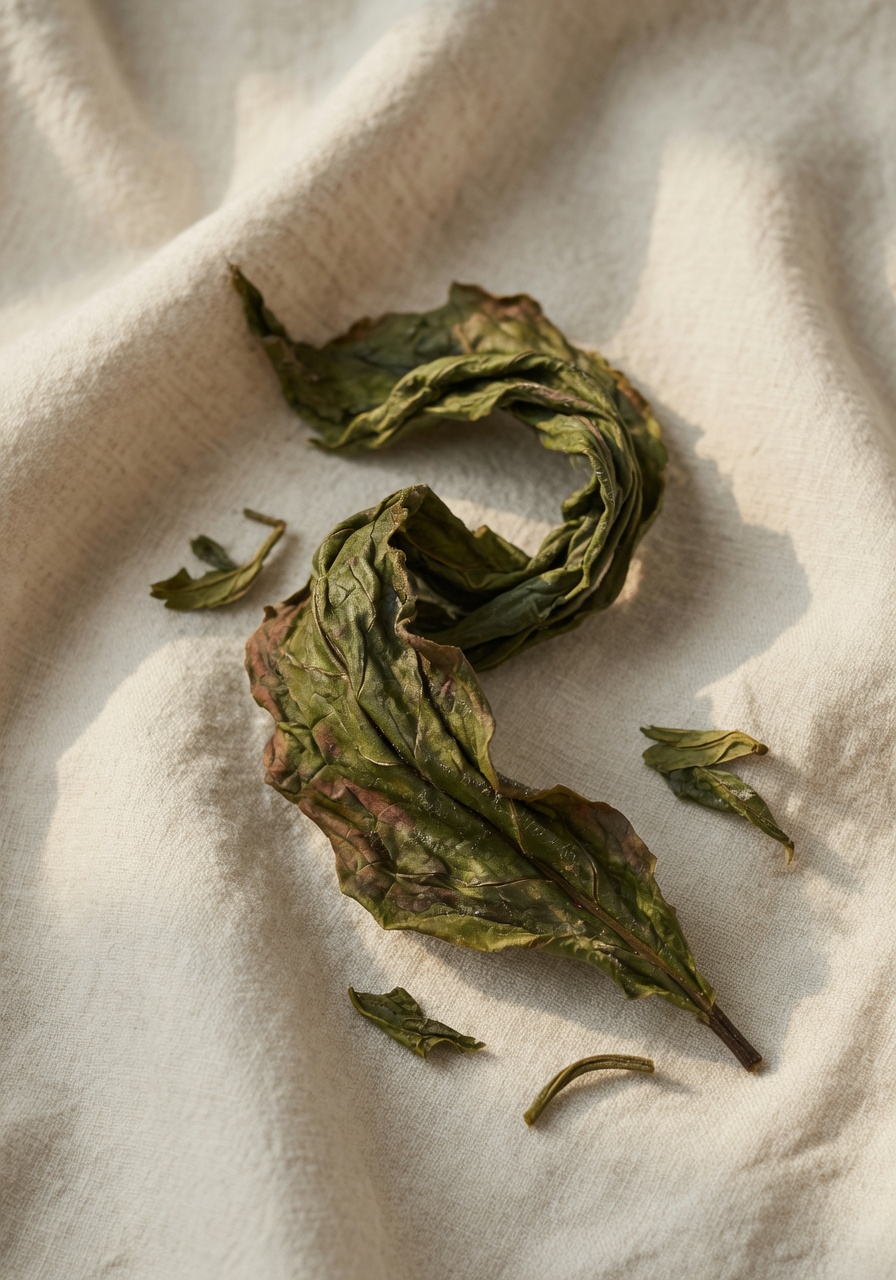
This lot comes from a small family garden on the southern face of Wudong, about 680m up, just below the famous high-mountain plots that command Fenghuang’s headline prices. The bushes here are roughly forty years old — not ancient by dancong standards, but mature enough to push real complexity into the cup. The variety is the Wu Ye type, locally called yā shǐ xiāng (鸭屎香) because the early growers refused to name the aroma honestly, hoping no one would steal cuttings of a tea that smelled, allegedly, like duck droppings. Anyone who has actually drunk it knows the name is a joke at the buyer’s expense.
Alongside Guangdong whites, we keep a small Q4 dancong programme each year, partly because the same growers who supply the white-tea cultivars also tend dancong bushes a few ridges over. This lot was picked in early April 2026, sun-withered on bamboo trays for about two hours, then rested indoors overnight before light bruising and a slow oxidation. The roast is medium — three passes of charcoal over ten days, then six weeks of rest in sealed tins before the sample run was packed.
We receive a single 4kg lot per year from this garden. Once it is gone, it is gone — the next harvest will read differently, because Fenghuang weather is never the same twice.
The leaf, brewed
Gardenia up top, almond skin underneath, long mineral close.
dry leaf
Long twisted strips, charcoal-brown with olive edges. Dry aroma of toasted barley and dried orchid.
wet leaf
After rinse the leaves open to deep forest-green with reddish rims — wet aroma of gardenia and warm stone.
liquor
Pale gold turning amber by the third infusion — clear, with a faint oily sheen at the meniscus.
aroma
Gardenia first, then sweet almond skin and a thin line of honey. Empty cup smells of orchid and warm sand.
taste
Bright florals up front, then a marzipan-like sweetness mid-palate. Light tannin on the sides of the tongue, never drying.
finish
Long cooling huígān — gardenia returns about twenty seconds after the swallow, with a mineral aftertaste like wet granite.
Brewing
A method, not a recipe.
Method
gongfu
Ratio
5g / 100ml
Water temp
95°C
First infusion
8s after a 3s rinse
Subsequent
8 to 10 infusions — add 3 to 5 seconds each pour, stretch to 30s past the sixth.
Use a porcelain gaiwan, not clay — clay will mute the florals. Pour fast and clean, no holding back drops between infusions.
If this becomes your daily leaf
This 5g sample is a taste, not a supply. The full tin lives at shop.thetea.app.