Why one bush makes one tea
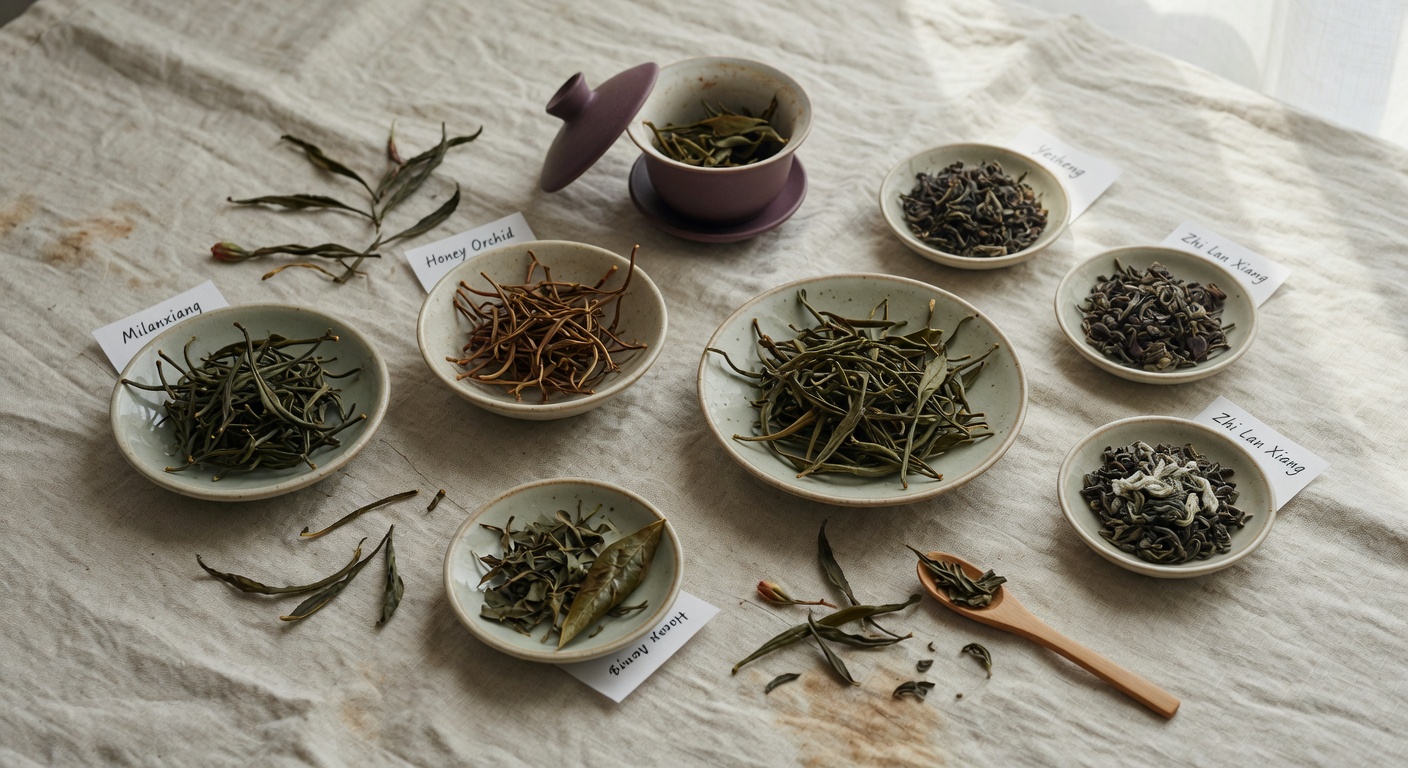
Phoenix dāncóng (凤凰单丛) translates literally as ‘single bush’ — and the name is not marketing. On the slopes of Fenghuang Shan in Chaozhou, Guangdong, individual tea trees were selected, propagated, and named for the aroma they expressed. Mí Lán Xiāng smells of honey-orchid. Yā Shǐ Xiāng — yes, ‘duck-shit aroma’ — was named to deter thieves and now carries one of the most coveted floral profiles in oolong. Each xiāng (aroma category) maps to a cultivar lineage descended from old mother trees, some over 600 years old, still producing in small registered plots.
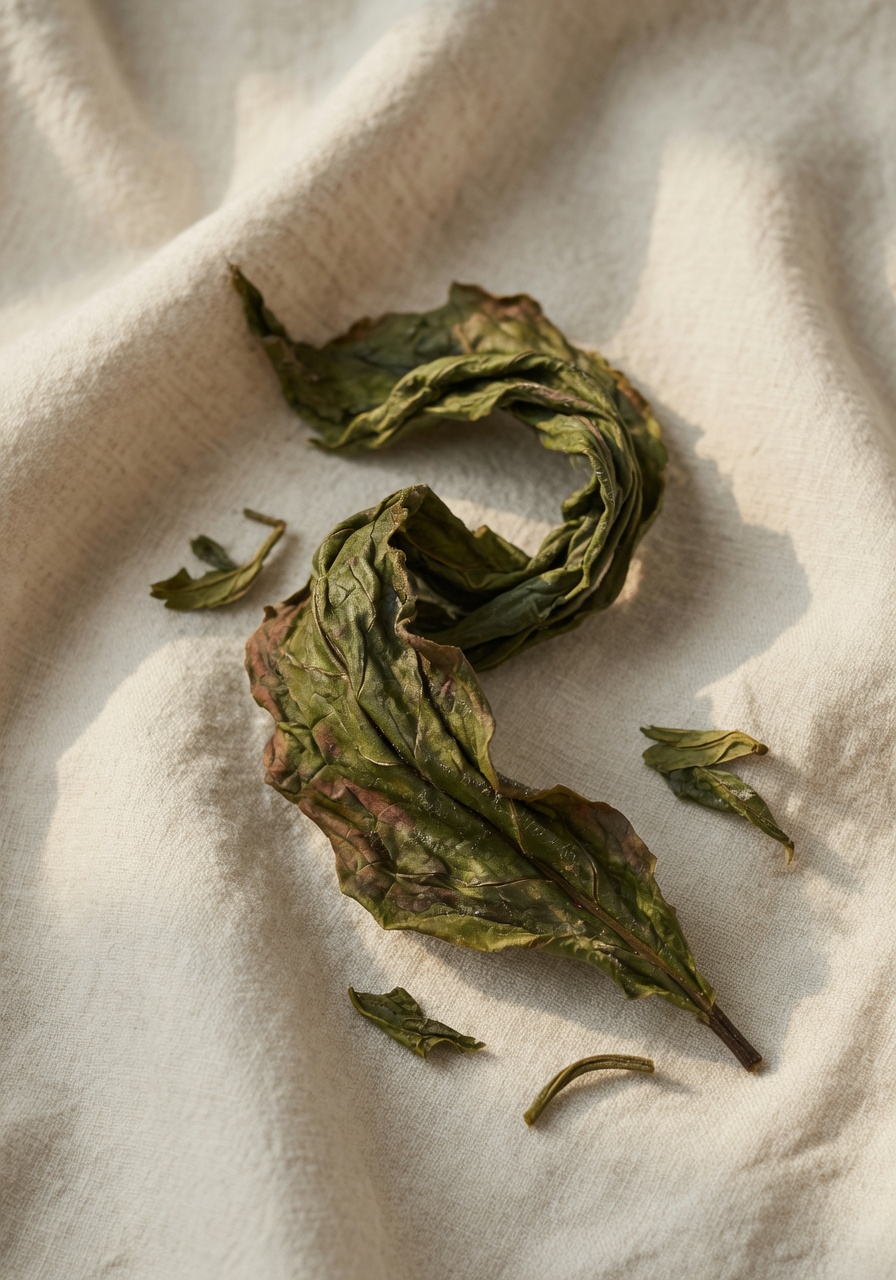
Picking begins in early April once the second flush has set. Pluckers take a bud and three leaves — larger than green tea standard — because dancong needs structure for the bruising to come. After a brief sun wither, leaves are shaken in flat bamboo trays through the night, every two hours, oxidising the edges while the centre stays green. This is the long, attentive part of the work: the master decides by smell when the leaves have moved from green grass to ripe orchid.
Firing is the signature. Charcoal roasting over longan or lychee wood, sometimes for 8 to 20 hours across several sittings with weeks of rest between, locks the aroma into the leaf. A light-roast Mí Lán Xiāng drinks bright and floral; a medium roast deepens into stone fruit and honeyed warmth; a heavy traditional roast tastes of toasted almond and dark caramel, mellowing for years in clay jars.
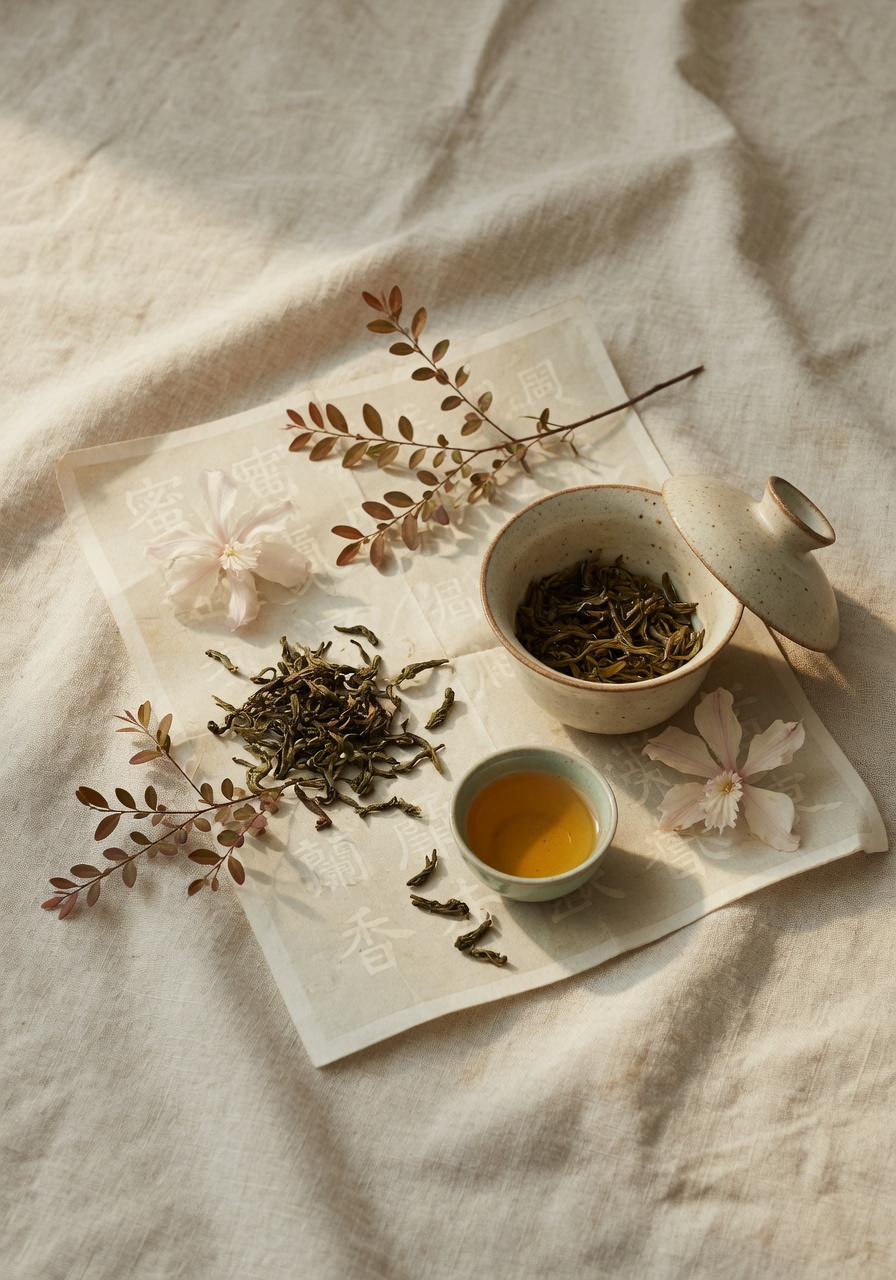
In the cup, dancong asks for a Chaozhou gài wǎn, water just off boil, and short infusions — five seconds, then climbing. Done well, a single 4g sample will give you twelve cups, each different. The encyclopedia entry at thetea.app/oolong/dancong has full cultivar genealogy if you want to follow the lineage from mother tree to plot.
Two aromas from spring 2026
Both samples are 4g of the same 2026 spring picking, sourced through Chen Hui Yi’s Chaozhou contacts and lightly to medium roasted in the traditional Fenghuang style.