tea.gratis · sampling channel Encyclopedia · School · Atlas · Pu-erh · Equipment EN · RU · · · FR · ES · AR
tea.gratis Cart (0)

home · catalog

Oolong — arbusto único

Phoenix dancong — un arbusto, un té

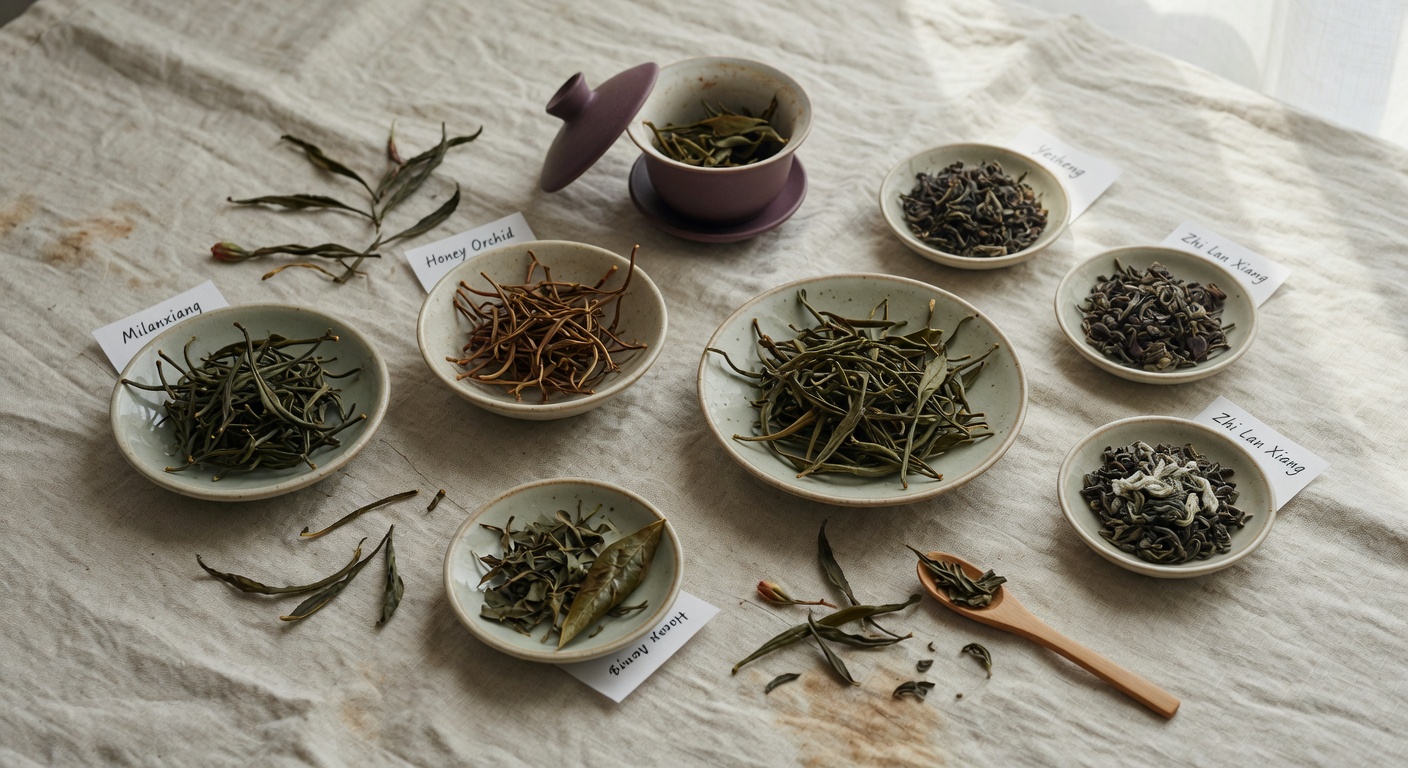
Desde las crestas graníticas de la montaña Fenghuang, al este de Guangdong, los oolongs de arbusto único llevan el perfume de los huertos, la miel, la almendra y la gardenia — no añadido, sino extraído de las hojas que crecieron en un solo árbol viejo. Estas son muestras de 4 g de la cosecha de primavera de 2026, suficientes para tres sesiones gongfu.

Oolong — arbusto único

Por qué un arbusto da un té único

Phoenix dāncóng (凤凰单丛) se traduce literalmente como ‘arbusto único’, y el nombre no es marketing. En las laderas de la montaña Fenghuang, en Chaozhou, Guangdong, se seleccionaron, propagaron y nombraron árboles de té individuales por el aroma que expresaban. Mí Lán Xiāng huele a miel y orquídea. Yā Shǐ Xiāng — sí, ‘aroma a excremento de pato’ — recibió ese nombre para disuadir a los ladrones y ahora tiene uno de los perfiles florales más codiciados en el oolong. Cada xiāng (categoría aromática) corresponde a un linaje de cultivares que desciende de viejos árboles madre, algunos con más de 600 años, que aún producen en pequeñas parcelas registradas.

La recolección comienza a principios de abril, una vez establecida la segunda brotada. Los recolectores toman una yema y tres hojas — más grandes que el estándar para el té verde — porque el dancong necesita estructura para el magullado posterior. Tras un breve marchitado al sol, las hojas se agitan en bandejas planas de bambú durante la noche, cada dos horas, oxidando los bordes mientras el centro permanece verde. Esta es la parte larga y atenta del trabajo: el maestro decide por el olor cuándo las hojas han pasado de hierba verde a orquídea madura.

El horneado es la firma. El tostado con carbón sobre leña de longan o lichi, a veces de 8 a 20 horas en varias sesiones con semanas de reposo entre ellas, fija el aroma en la hoja. Un Mí Lán Xiāng de tostado ligero se bebe brillante y floral; un tostado medio se ahonda en fruta de hueso y calidez melosa; un tostado tradicional intenso sabe a almendra tostada y caramelo oscuro, suavizándose durante años en jarras de barro.

En la taza, el dancong pide un gài wǎn de Chaozhou, agua casi hirviendo e infusiones cortas — cinco segundos, luego ir alargando. Bien hecho, una sola muestra de 4 g le dará doce tazas, cada una diferente. La entrada de la enciclopedia en thetea.app/oolong/dancong contiene la genealogía completa de los cultivares si desea seguir el linaje desde el árbol madre hasta la parcela.

Dos aromas de la primavera de 2026

Ambas muestras son de 4 g de la misma cosecha de primavera de 2026, obtenidas a través de los contactos de Chen Hui Yi en Chaozhou y tostadas de ligero a medio al estilo tradicional de Fenghuang.

A buyer's note

How to brew your dancong sample

Temperatura del agua: 95–100 °C

Dancong needs heat. Anything cooler and the aroma compounds stay locked in the leaf. Use a kettle that holds boil, not a dispenser set to 85°C.

Dosis: 4 g en 100–110 ml

The full sample fits a standard Chaozhou gaiwan. If your vessel is larger, scale up — dancong rewards a generous leaf-to-water ratio, not a thin pour.

Infusiones rápidas, luego ir alargando

First three infusions at 5 seconds. Then 8, 12, 20, 30. A good dancong gives 10–12 steeps; the late ones turn honeyed and quiet.

Enjuagar una vez, brevemente

A 3-second rinse with boiling water wakes the rolled leaves. Pour it off — the second pour is your first cup, and it should already smell of orchid.

Conservar sellado, protegido de la luz

Roasted oolongs keep well for 6–12 months in foil-lined pouches at room temperature. Avoid the fridge — condensation flattens the aroma.

Catar la taza vacía

Chaozhou tradition: smell the gaiwan lid and the drained cup after pouring. The 'cold aroma' (lěng xiāng) is where dancong tells you its true cultivar.

Common questions

Asked, answered.

Why is one called 'duck-shit aroma'?

Folk story: the farmer who first propagated it called it that to stop neighbours stealing cuttings. The tea itself smells of gardenia and almond, not what the name suggests.

Is dancong actually from one single tree?

Originally yes. Today, true single-bush teas exist but are rare and expensive. Most market *dāncóng* comes from cultivar clones of a named mother tree, picked and processed separately.

Will 4g really give me a full session?

Yes. Gongfu brewing with 4g in a 100ml gaiwan gives 8–12 short infusions — roughly 800–1200ml of tea, enough for two people to share one sitting.

Light roast or medium roast — which sample is which?

The 2026 *Mí Lán Xiāng* is a light-medium roast (bright, floral). The *Yā Shǐ Xiāng* is medium (deeper, more honeyed). Both are from the same April harvest.

Can I brew dancong Western-style?

You can, but you'll miss most of it. Use 2g per 200ml at 95°C for 2 minutes. For the full experience, a small gaiwan is worth borrowing — see tea.equipment for entry-level Chaozhou ware.

How long will the samples stay fresh?

Sealed in the foil pouch, about 12 months at room temperature. Once opened, brew within 6–8 weeks for the cleanest aromatic profile.

Where can I learn more about oolong processing?

The dancong module at tea.school covers oxidation and roast curves in detail. The encyclopedia entry at thetea.app/oolong/dancong maps the full cultivar tree.

If I like these, where do I buy a full tin?

Full 50g tins of both 2026 dancongs ship from shop.thetea.app. Hui Yi releases a limited spring batch each May.