tea.gratis · sampling channel Encyclopedia · School · Atlas · Pu-erh · Equipment EN · RU · · · FR · ES · AR
tea.gratis Cart (0)

home · catalog

乌龙 — 武夷岩茶

来自Wǔyí Shān的岩茶 — Q3微批量,5克小包装

岩茶 — 字面意思是岩石茶 — 是产自福建北部悬崖凹地的焙火乌龙。这些样品来自2026年春季采摘,于初秋完成最后焙火,此刻正处于品饮的最佳时机。两个品种、两种风土,每款5克。

乌龙 — 武夷岩茶

岩、火与武夷乌龙的悠长余韵

武夷岩茶(岩茶)生长于闽北的丹霞砂岩峡谷中 — 这是一片联合国教科文组织景观,茶树根系扎入矿化的岩缝,而非翻耕的土壤。这种矿物质的吸收赋予岩茶标志性的yán yùn(岩韵),即岩石韵味 — 一种咸鲜、近乎湿石般的深度,在饮尽后良久仍萦绕喉底。

采摘每年一次,于四月下旬至五月中旬,此时新梢已开展至三至四片成熟叶。这比绿茶的采摘时间晚且叶片较粗老 — 岩茶需要足够的结构来承受后续工序。鲜叶经日晒萎凋后,在竹筛中摇青以磨损叶缘。氧化程度约达40–60%,介于绿茶与红茶之间,之后杀青、揉捻、干燥。

然后,定义岩茶的工序开始了:炭焙。茶品在龙眼木炭火上低架竹焙笼中反复烘焙,静置数周后再次焙火 — 有时一年内历经三至四轮焙火。轻火(轻火)保留花香在前;中火(中火)是多数茶人熟知的经典平衡;足火(足火)则推向可可、龙眼干与烤谷物的风味。我们选择第三季样品时机有所考量:2026年春季茶菁,经焙火与静置至秋季,正是焙火气息沉淀,果香从火中苏醒的时刻。

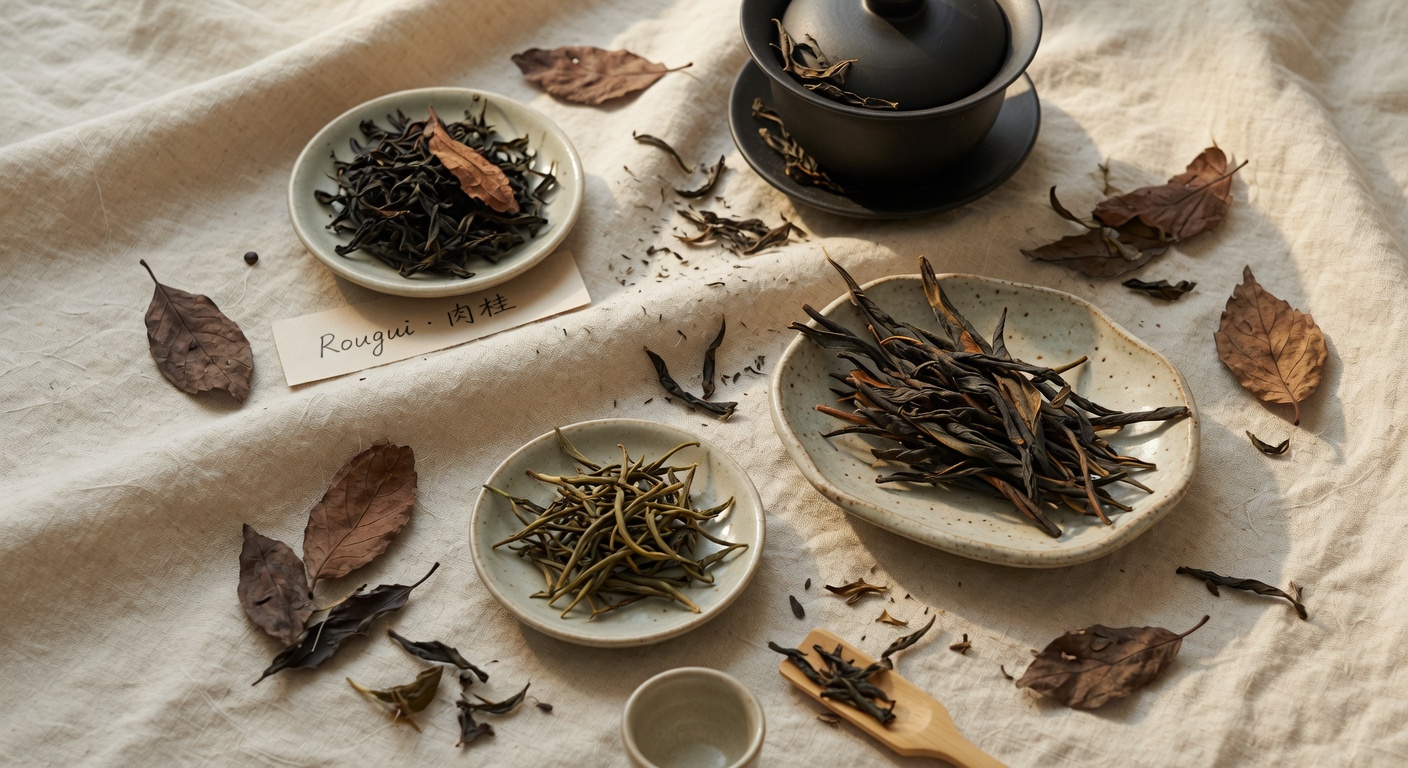
本回发布的两款茶品由两个品种担纲。Ròu Guì(肉桂)就是肉桂品种 — 明亮、带胡椒感,并有核果类的香气上扬。我们这批量取自zhèngyán(正岩)地块,即内核景区的岩石地带,是矿物质韵味最重的岩茶风土。Lǎo Cōng Shuǐ Xiān(老丛水仙)来自树干附苔、根系更深的老丛水仙茶树 — 较柔和、木质调,带有乳脂般的cōng wèi(丛味),即老丛的独特韵味。

若想更深入了解武夷品种与sì dà míng cōng(四大名丛),我们推荐学生参考 thetea.app/wuyi-yancha 上的百科条目。

本季的岩茶样品

两款5克小份样品,取自2026年春季采摘,经夏日静置,此刻正处于首次品饮高峰窗口。

A buyer's note

How to taste yancha at sample scale

使用沸水

Yancha needs full 100°C water to open the roast. Anything cooler and you get only the surface — the rock rhyme stays locked in the leaf.

投茶量足,浸泡时间短

For a 5g sample in a 100ml gaiwan: rinse once, then steep 8s, 10s, 15s, 20s, climbing slowly. Yancha gives 6–8 infusions when dosed properly.

让茶叶静置后再评判

A fresh-roasted yancha can taste ashy for the first month. Our Q3 lots have already rested through summer — but let the open sample sit a week in its tin before brewing if it travelled hard.

存放于阴凉、干燥、密封处

Yancha keeps for years if sealed away from light, humidity, and strong smells. Re-roast is possible but not needed for these — drink within 12 months for best fruit.

闻空杯香

Pour out, then sniff the warm porcelain. Yancha reveals its aromatic top notes — orchid, cinnamon, dried longan — in the empty cup more clearly than in the liquor.

搭配合适的茶具

A thin-walled porcelain gaiwan is the honest tool for sampling. Yixing concentrates roast but masks faults — save it for production tins. See [tea.equipment](https://tea.equipment) for gaiwan picks.

Common questions

Asked, answered.

What does zhengyan mean and why does it matter?

*Zhèngyán* (正岩) is the core scenic zone of Wuyishan — the inner cliffs where mineral soil is densest. It is the most prized yancha terroir, and the source of our Rou Gui lot.

Is yancha the same as Da Hong Pao?

*Dà Hóng Páo* (大红袍) is one famous yancha cultivar and blend style. Rou Gui and Shui Xian are the other two pillars of the category, alongside Tie Luo Han and Bai Ji Guan.

How roasted are these samples?

Both lots are medium roast (*zhōng huǒ*) — toasted enough to carry depth and storage stability, light enough to keep the cultivar's floral and fruit character clear in the cup.

Can I brew yancha Western-style?

You can, but you lose most of what makes it yancha. 3g in a 200ml pot for 3 minutes works as a starter — gongfu method reveals far more. Our course at [tea.school](https://tea.school) covers both.

Is one sample enough to understand a yancha?

Honestly — a 5g cut is a taste, not a study. It is enough to decide if a cultivar speaks to you. If it does, full tins live at [shop.thetea.app](https://shop.thetea.app).

Why only two yancha this quarter?

We sample what is drinking well right now. Spring 2026 was a tight harvest in Wuyishan — these two lots cleared our cupping table. Q4 will add a heavier-roast Shui Xian.

Does the shipping cost include both samples?

Yes. One shipping fee covers any combination of samples in your quarterly order, including pick-3 selections from outside this category.

How long will an opened sample stay good?

Reseal and drink within four to six weeks. Yancha is stable but loses aromatic top notes once air gets in repeatedly. A 5g cut is two to three gongfu sessions.