tea.gratis · sampling channel Encyclopedia · School · Atlas · Pu-erh · Equipment EN · RU · · · FR · ES · AR
tea.gratis Cart (0)

home · catalog

أولونغ — Wuyi yancha

شاي الصخور من Wǔyí Shān — دفعات محدودة للربع الثالث بقطع 5 غرام

Yancha — أي حرفيًا شاي الصخور — هو أولونغ محمص يُزرع في تجاويف الجروف في شمال فوجيان. تأتي هذه العينات من قطاف ربيع 2026، وقد تم تحميصها النهائي في أوائل الخريف، وتصل في أفضل نافذة للتذوق. صنفان، منطقتان، 5 غرام لكل منهما.

أولونغ — Wuyi yancha

الصخور والنار والطعم الباقي لشاي أولونغ Wuyi

يُزرع شاي Wuyi yancha (岩茶) في أودية الحجر الرملي دانشيا في شمال فوجيان — وهو مشهد طبيعي مُدرج في قائمة اليونسكو، حيث تتجذر شجيرات الشاي في شقوق معدنية بدلاً من التربة المحروثة. يُضفي هذا الامتصاص المعدني على اليانتشا نكهته المميزة yán yùn (岩韵)، أي قافية الصخور — عمق لذيذ، يكاد يكون كطعم الحجر الرطب، يبقى في الحلق طويلاً بعد أن يفرغ الكوب.

يتم القطف مرة واحدة في السنة، من أواخر أبريل حتى منتصف مايو، عندما تكون البراعم قد انفتحت إلى ثلاث أو أربع أوراق ناضجة. هذا القطاف متأخر وأكثر خشونة من قطاف الشاي الأخضر — يحتاج اليانتشا إلى بنية قوية ليصمد أمام ما سيأتي بعد ذلك. تُذبّل الأوراق الطازجة تحت الشمس، ثم تُرجّ في براميل من الخيزران لِتكدم الأطراف. تصل الأكسدة إلى حوالي 40–60٪، في منتصف المسافة بين الأخضر والأسود، قبل أن تُقضى على الخضرة (kill-greened) وتُلف وتُجفف.

ثم يبدأ العمل الذي يحدد هوية اليانتشا: التحميص بالفحم. تُحمّص الدفعات فوق جمر خشب اللونجان في سلال منخفضة محبوكة، وتُترك لترتاح أسابيع، ثم تُحمّص مرة أخرى — أحيانًا ثلاث أو أربع مرات على مدار عام كامل. التحميص الخفيف (轻火) يُبقي النكهات الزهرية في المقدمة. التحميص المتوسط (中火) هو التوازن الكلاسيكي الذي يعرفه معظم الشاربين. التحميص الثقيل (足火) يدفع بالنكهة نحو الكاكاو، اللونجان المجفف، والحبوب المحمصة. نافذة عيناتنا في الربع الثالث مقصودة: أوراق ربيع 2026، التي أُنهيت تحميصًا وارتاحت حتى الخريف، هي اللحظة التي يستقر فيها التحميص وتعود الفاكهة من خلال النار.

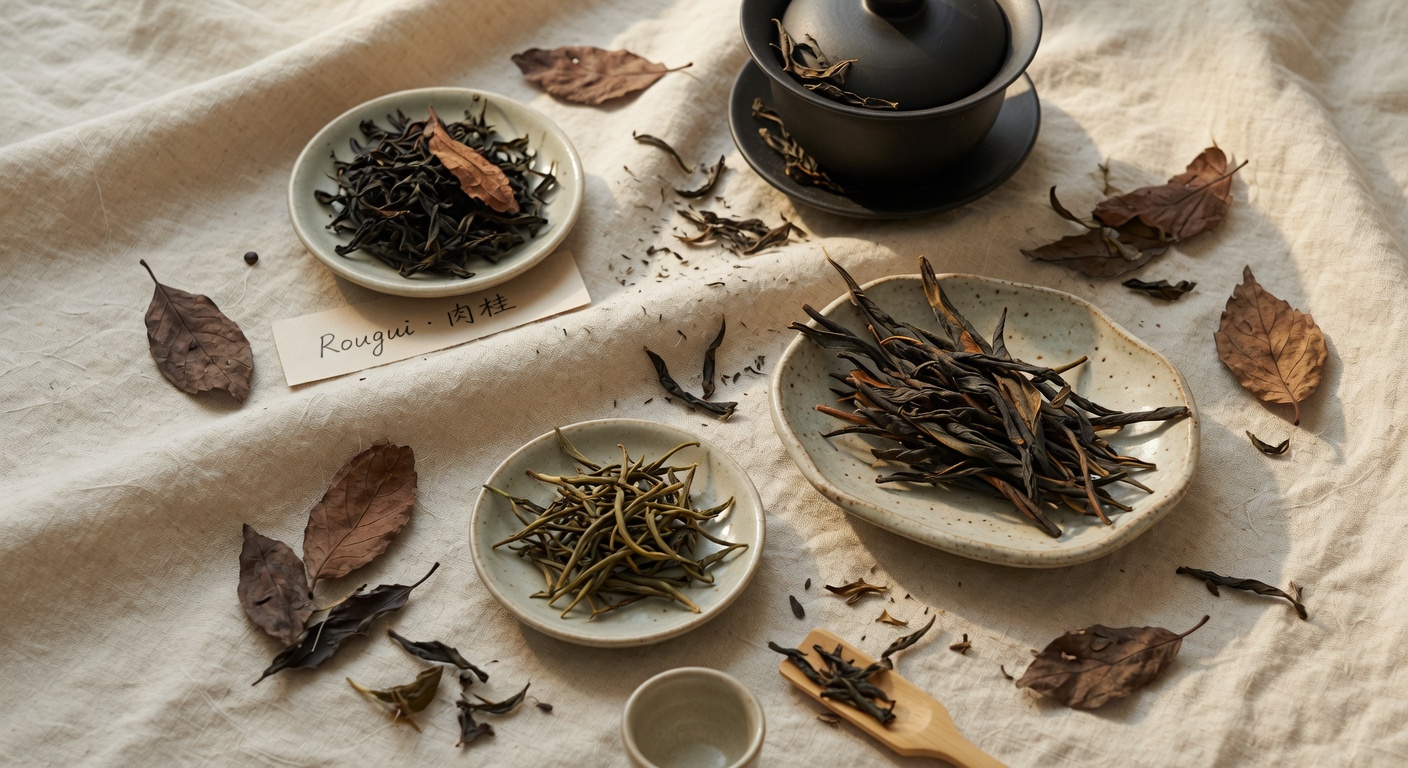
يحمل هذا الإصدار صنفين. Ròu Guì (肉桂) هو صنف لحاء القرفة — مشرق، حار كالفلفل، مع نكهة فاكهة ذات نواة. يأتي دفعتنا من قطعة أرض zhèngyán (正岩)، أي صخور المنطقة الأساسية الخلابة، وهي أكثر تربة يانتشا غنية بالمعادن. Lǎo Cōng Shuǐ Xiān (老丛水仙) يأتي من أشجار شوي شيان القديمة ذات الجذوع المغطاة بالطحالب والجذور الأعمق — أكثر نعومة، بنكهة خشبية، مع طعم كريمي cōng wèi (丛味)، طعم الشجرة القديمة.

للحصول على خريطة أعمق لأصناف وويي ونباتات sì dà míng cōng (الشجيرات الأربع الشهيرة)، فإن المقال الموسوعي على thetea.app/wuyi-yancha هو المرجع الذي نرسل إليه الطلاب.

عينات يانتشا هذا الربع

قطعتان بوزن 5 غرام من قطاف ربيع 2026، مرتاحة طوال الصيف، تُشرب الآن في نافذة ذروتها الأولى.

Automated translation — native review pending.

A buyer's note

How to taste yancha at sample scale

استخدم الماء المغلي

Yancha needs full 100°C water to open the roast. Anything cooler and you get only the surface — the rock rhyme stays locked in the leaf.

ضع جرعة قوية، وانقع لفترة قصيرة

For a 5g sample in a 100ml gaiwan: rinse once, then steep 8s, 10s, 15s, 20s, climbing slowly. Yancha gives 6–8 infusions when dosed properly.

اترك الأوراق ترتاح قبل التقييم

A fresh-roasted yancha can taste ashy for the first month. Our Q3 lots have already rested through summer — but let the open sample sit a week in its tin before brewing if it travelled hard.

خزّن في مكان بارد وجاف ومحكم الإغلاق

Yancha keeps for years if sealed away from light, humidity, and strong smells. Re-roast is possible but not needed for these — drink within 12 months for best fruit.

شم الكوب الفارغ

Pour out, then sniff the warm porcelain. Yancha reveals its aromatic top notes — orchid, cinnamon, dried longan — in the empty cup more clearly than in the liquor.

طابق الأدوات مع الشاي

A thin-walled porcelain gaiwan is the honest tool for sampling. Yixing concentrates roast but masks faults — save it for production tins. See [tea.equipment](https://tea.equipment) for gaiwan picks.

Common questions

Asked, answered.

What does zhengyan mean and why does it matter?

*Zhèngyán* (正岩) is the core scenic zone of Wuyishan — the inner cliffs where mineral soil is densest. It is the most prized yancha terroir, and the source of our Rou Gui lot.

Is yancha the same as Da Hong Pao?

*Dà Hóng Páo* (大红袍) is one famous yancha cultivar and blend style. Rou Gui and Shui Xian are the other two pillars of the category, alongside Tie Luo Han and Bai Ji Guan.

How roasted are these samples?

Both lots are medium roast (*zhōng huǒ*) — toasted enough to carry depth and storage stability, light enough to keep the cultivar's floral and fruit character clear in the cup.

Can I brew yancha Western-style?

You can, but you lose most of what makes it yancha. 3g in a 200ml pot for 3 minutes works as a starter — gongfu method reveals far more. Our course at [tea.school](https://tea.school) covers both.

Is one sample enough to understand a yancha?

Honestly — a 5g cut is a taste, not a study. It is enough to decide if a cultivar speaks to you. If it does, full tins live at [shop.thetea.app](https://shop.thetea.app).

Why only two yancha this quarter?

We sample what is drinking well right now. Spring 2026 was a tight harvest in Wuyishan — these two lots cleared our cupping table. Q4 will add a heavier-roast Shui Xian.

Does the shipping cost include both samples?

Yes. One shipping fee covers any combination of samples in your quarterly order, including pick-3 selections from outside this category.

How long will an opened sample stay good?

Reseal and drink within four to six weeks. Yancha is stable but loses aromatic top notes once air gets in repeatedly. A 5g cut is two to three gongfu sessions.