From samovar kitchen to Yunnan cellar
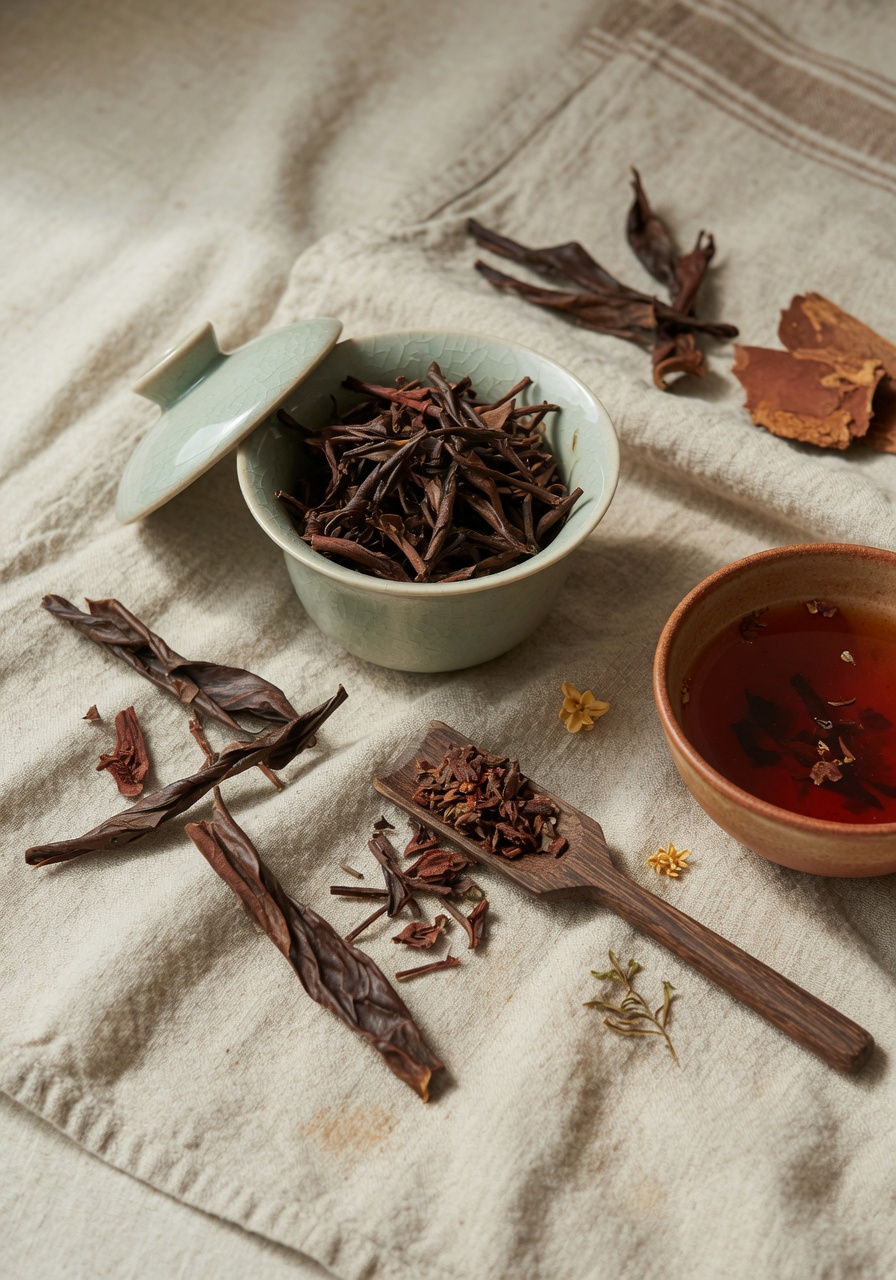
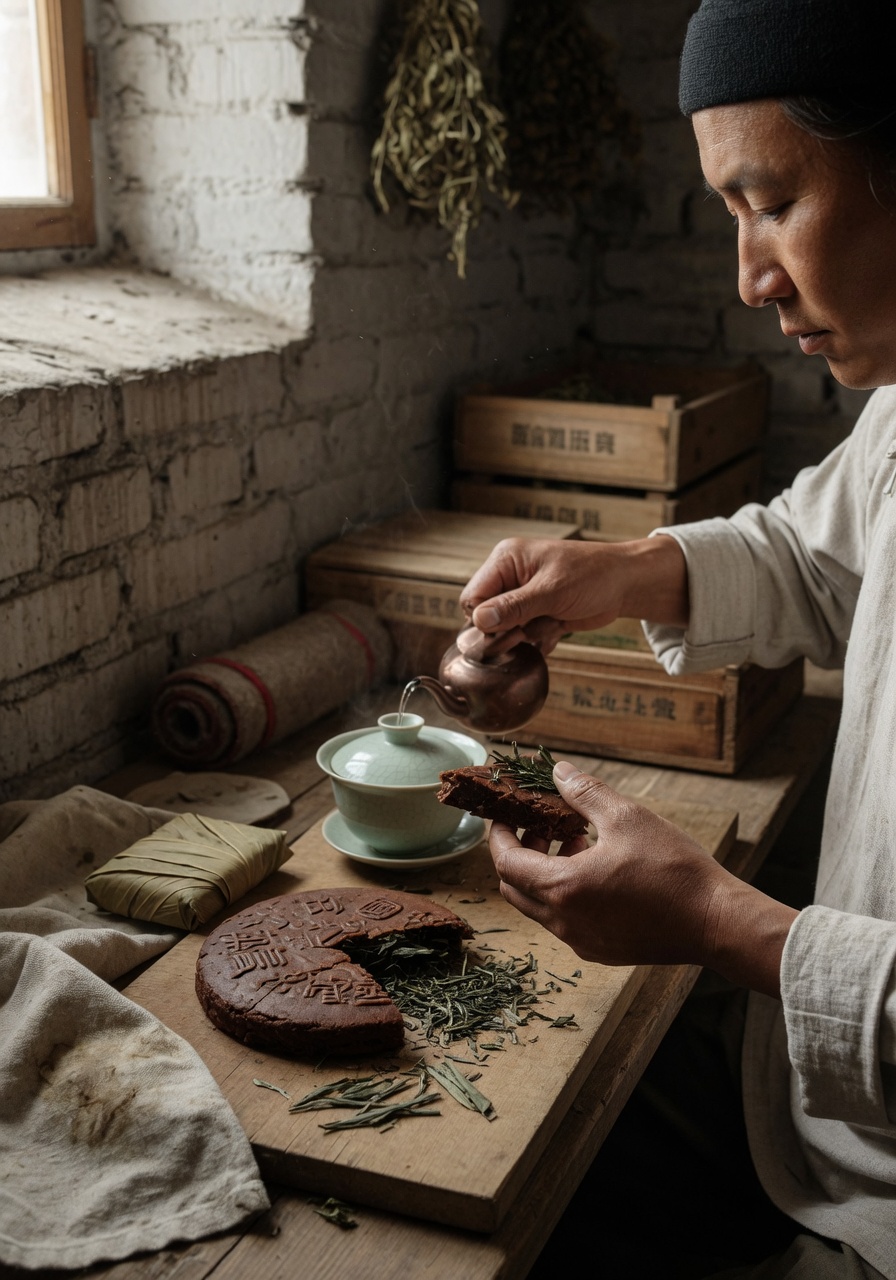
Amgalan Chin grew up on the Russia–Mongolia border, in a household where tea was never optional and rarely loose. His grandmother boiled compressed brick tea with milk, salt and a knuckle of butter, ladling it out before sunrise to herders heading into the steppe. That brick — coarse, smoky, decades into its second life — was his first lesson in hei cha long before he had a name for it.
His route into specialty tea ran through Irkutsk and then Kunming. In his twenties he apprenticed with a Buryat trader who still sourced pressed tea overland, the slow way, along fragments of the old caravan corridor. From there Amgalan moved south, learning to read maocha in Menghai, then spending three winters between Bulang and Yiwu villages, sitting with producers who had been pressing cakes since the eighties. He is reluctant to call any of them his master — “they were patient with me,” he says, “which is not the same thing” — but the technical vocabulary he uses today is theirs.
What sets Amgalan apart in the Teamotea roster is his cross-cultural ear. He understands why a Mongolian customer wants a brick that can survive a rolling boil with dairy, and why a Guangzhou collector wants the opposite — a sheng that will reward thirty years of stillness. He moves between those rooms without flinching. On shop.puerh.app and shop.thetea.app he curates the aged inventory; on puerh.app he writes the aging-section essays that newer drinkers quietly bookmark.
His signature teas reflect that range. He is partial to mid-storage sheng from Yiwu — fifteen to twenty years in dry Kunming conditions, the bitterness softened but the aromatics still alive. He champions thoughtful shou, particularly lighter ferments that keep some of the leaf structure intact rather than collapsing into pure earth. And he keeps a small shelf of Russian-aged bricks, stored in cool wooden cabinets in Ulan-Ude, as a reminder that Yunnan is not the only place tea has learned to grow old.
At tea.school he leads the pu-erh and dark-tea paths, walking cohorts through wet-storage versus dry-storage, the chemistry of post-fermentation, and the practical question every new collector asks: how do I know if this cake is worth keeping. On tea.community he hosts a quiet monthly cohort where members brew the same young sheng in parallel and compare notes a year later — a slow form of teaching that suits him.
For tea.gratis he assembles compact aging-aware samples: 5g of a young sheng with notes on what it might become, 5g of a comparable aged cake so the drinker can taste the arc, a pressed hei cha nugget for the kettle. The boxes are small on purpose. “You cannot rush this category,” he says. “A sample is permission to begin, not a verdict.”
Bulang, Yiwu, and a cellar in Buryatia
Amgalan does not own a garden. His work sits one step downstream — in the storage rooms, the pressing benches, and the long conversations with farmers whose names rarely make it onto a wrapper. His sourcing follows two axes: the Yunnan mountains where the leaf is grown, and the northern cellars where a portion of it is taught to age.
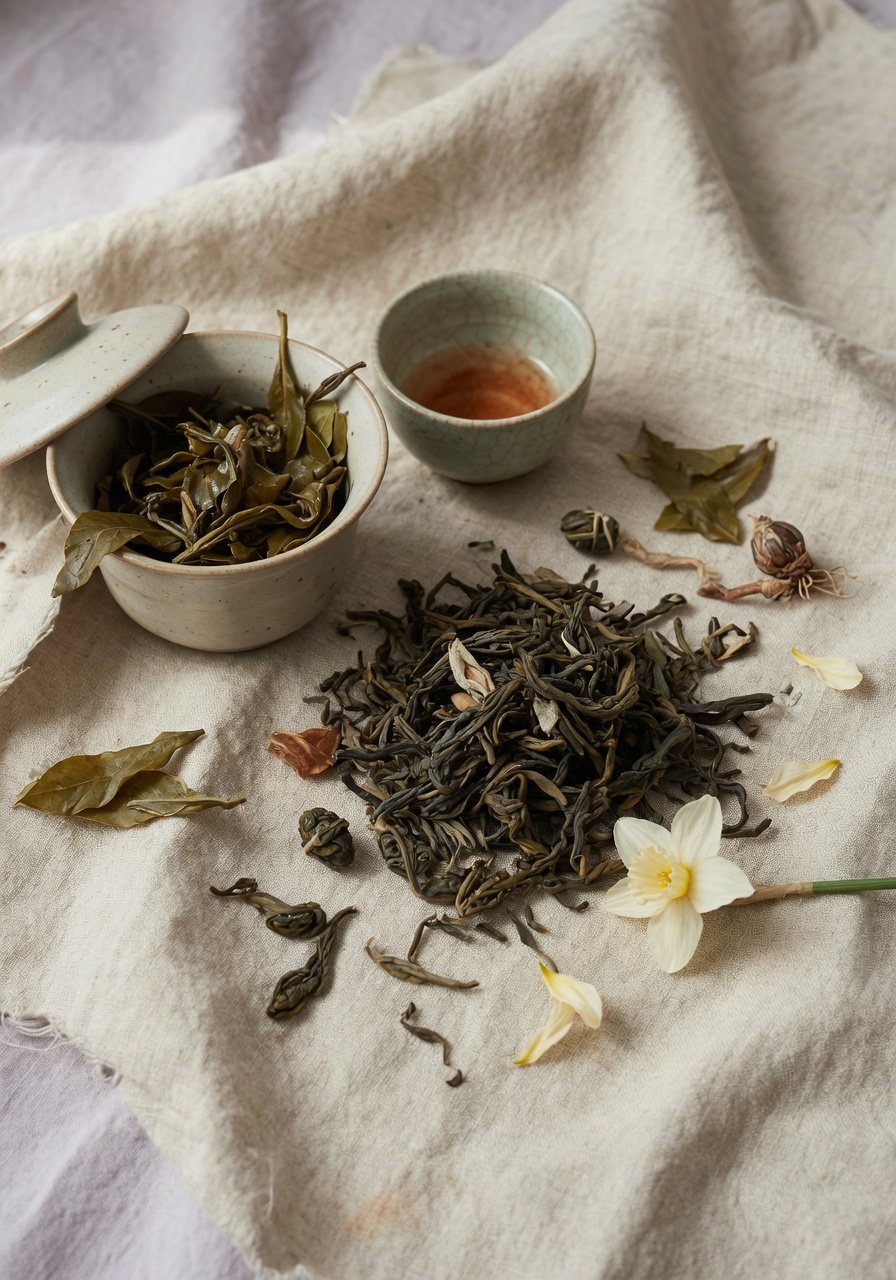
In Yunnan he works most closely with two areas. Bulang Shan, in Menghai, gives him the assertive, bitter-into-sweet sheng that rewards a decade of patience — thick-leafed material from old gardens above 1,600 metres, picked in spring when the mineral edge is sharpest. Yiwu, on the Laos-facing side of Xishuangbanna, gives him the opposite register: softer, more floral sheng from forest gardens where the tea trees share canopy with camphor and wild fruit. He samples extensively from both before committing to a pressing, and he prefers small producers who still sun-dry on bamboo rather than using machine driers.
The second half of the story happens four thousand kilometres north. In a converted timber building outside Ulan-Ude, Amgalan keeps a modest dry-storage cellar where selected cakes age in continental conditions — low humidity, sharp temperature swings, no climate control. The aging is slower than Guangdong’s, the aromatics more preserved, the bitterness more stubborn. It is a deliberately different curve, and it gives his catalogue a flavour profile that Kunming-stored or Hong Kong-stored cakes simply cannot reproduce. Several pieces in his sample boxes come from this cellar, with full provenance noted on the wrapper.