tea.gratis · sampling channel Encyclopedia · School · Atlas · Pu-erh · Equipment EN · RU · · · FR · ES · AR
tea.gratis Cart (0)

home · catalog

Oolong — Wuyi yancha

Rock tea from Wǔyí Shān — Q3 micro-lots in 5g cuts

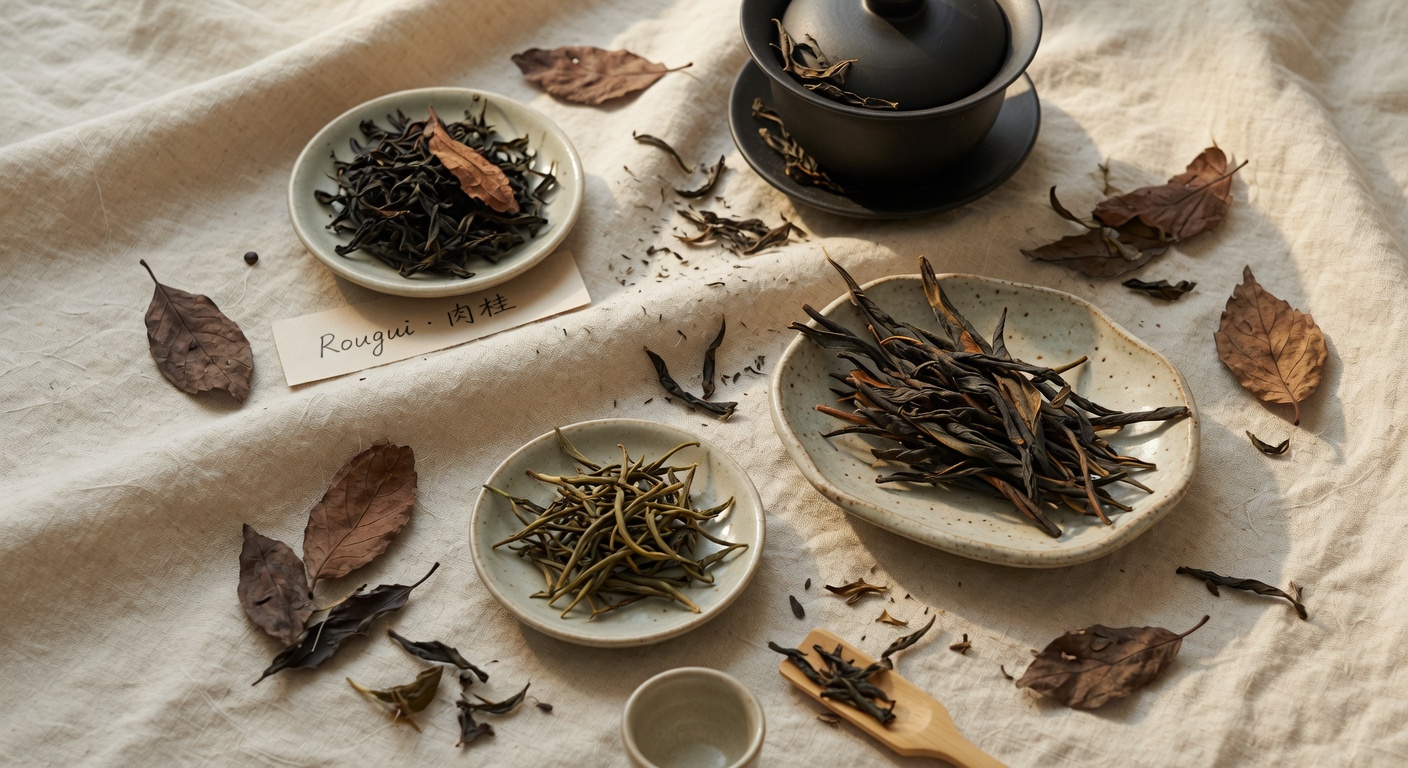
Yancha — literally rock tea — is roasted oolong grown in the cliff hollows of northern Fujian. These samples come from the 2026 spring pluck, finish-roasted in early autumn, and arrive at peak window for tasting. Two cultivars, two terroirs, 5g each.

Oolong — Wuyi yancha

Rock, fire, and the long finish of Wuyi oolong

Wuyi yancha (岩茶) is grown in the Danxia sandstone gorges of northern Fujian — a UNESCO landscape where tea bushes root into mineralised cracks rather than tilled soil. That mineral uptake gives yancha its signature yán yùn (岩韵), the rock rhyme — a savoury, almost wet-stone depth that lingers in the back of the throat long after the cup is empty.

Picking happens once a year, in late April through mid-May, when shoots have opened to three or four mature leaves. This is later and coarser than green-tea plucking — yancha needs structure to survive what comes next. The fresh leaf is sun-withered, then rocked in bamboo drums to bruise the edges. Oxidation runs to roughly 40–60%, partway between green and black, before the leaves are kill-greened, rolled, and dried.

Then the work that defines yancha begins: charcoal roasting. Lots are roasted over longan-wood embers in low woven baskets, rested for weeks, and roasted again — sometimes three or four passes across a full year. A light roast (轻火) keeps florals forward. A medium roast (中火) is the classical balance most drinkers know. A heavy roast (足火) pushes into cocoa, dried longan, and toasted grain. Our Q3 sample window is deliberate: spring 2026 leaf, finished and rested into autumn, is the moment a roast settles and the fruit comes back through the fire.

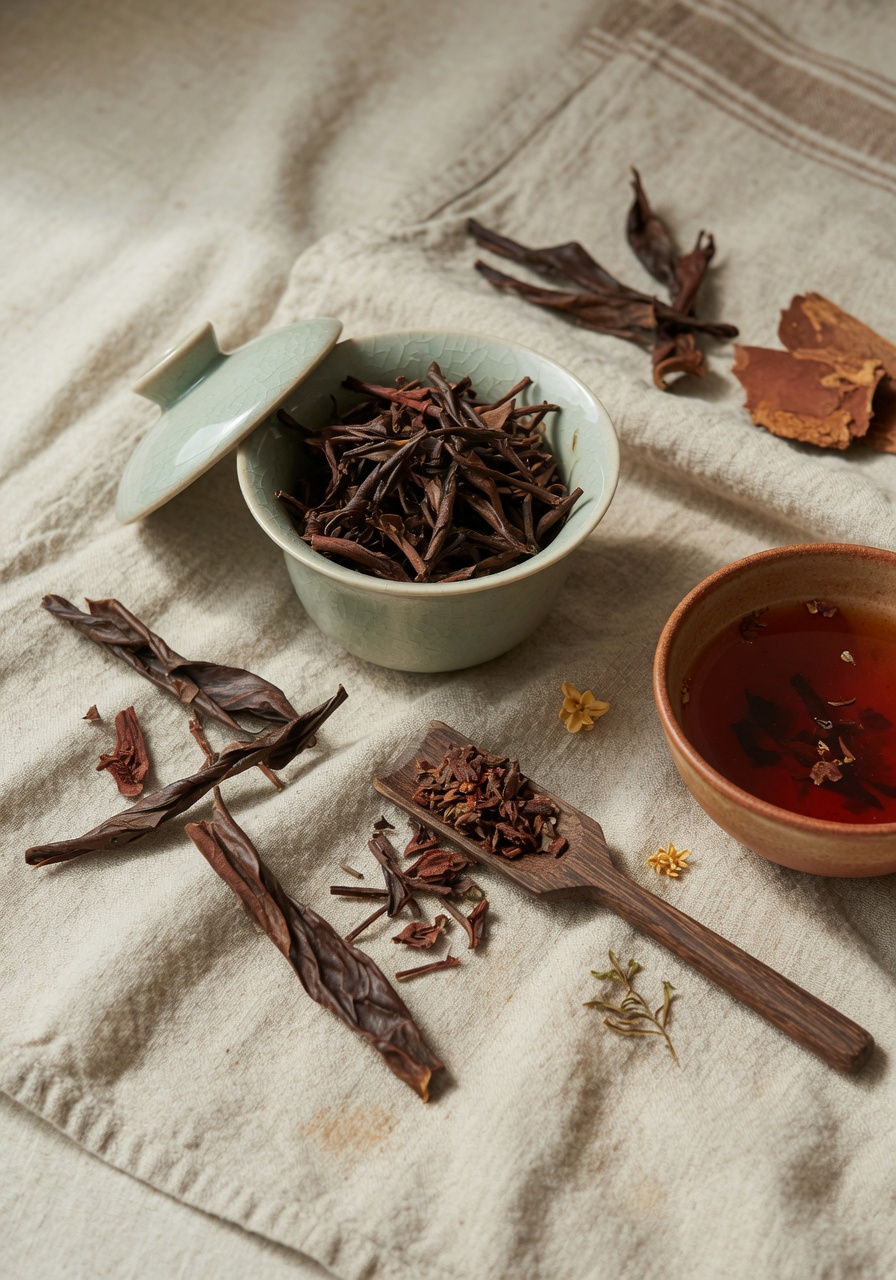
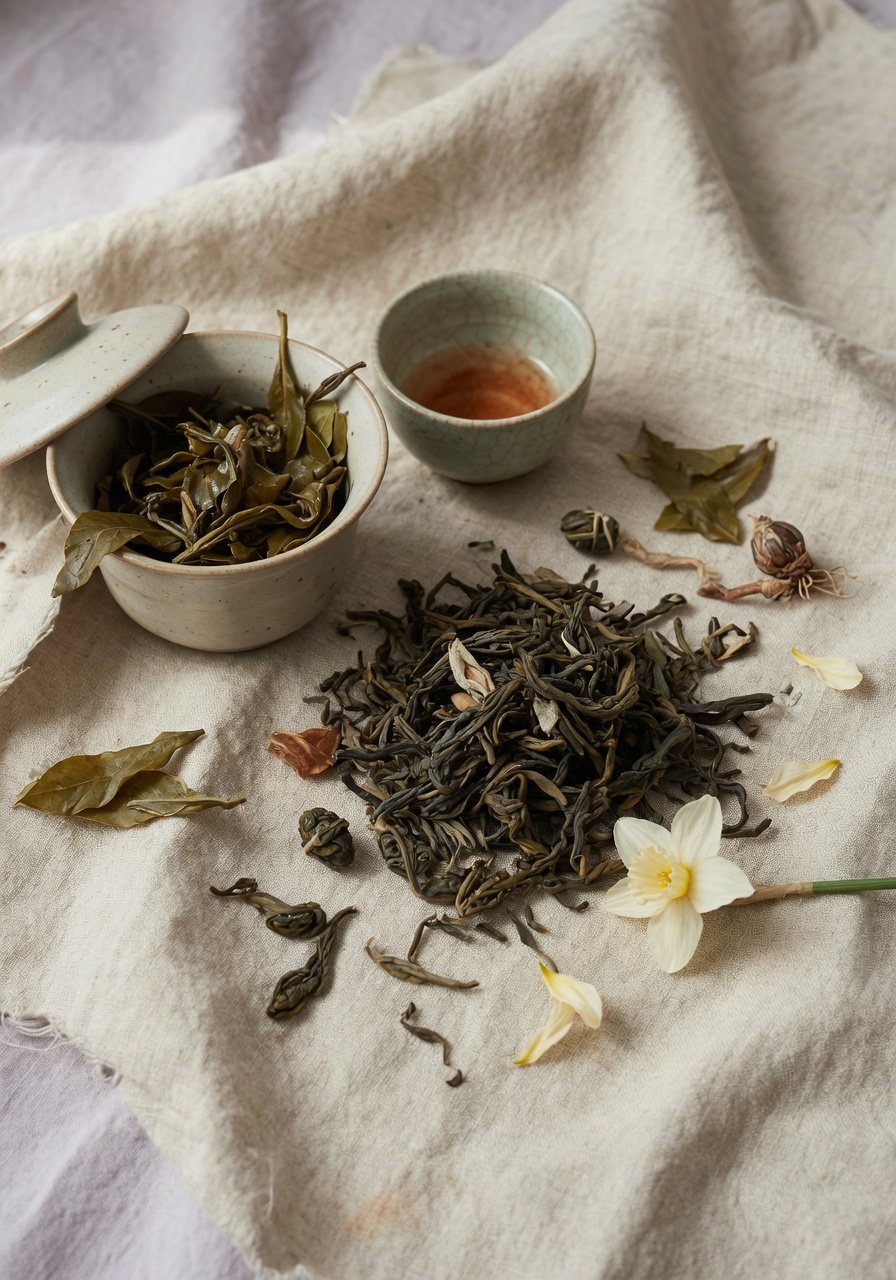
Two cultivars carry this drop. Ròu Guì (肉桂) is the cinnamon-bark cultivar — bright, peppery, with stone-fruit lift. Our lot is from a zhèngyán (正岩) plot, meaning core-scenic-zone rock, the most mineral-driven yancha terroir. Lǎo Cōng Shuǐ Xiān (老丛水仙) comes from old-bush Shui Xian trees with mossy trunks and deeper roots — softer, woodier, with a creamy cōng wèi (丛味), the old-bush taste.

For a deeper map of Wuyi cultivars and the sì dà míng cōng (four famous bushes), the encyclopedia entry on thetea.app/wuyi-yancha is the reference we send students to.

This quarter’s yancha samples

Two 5g cuts from the 2026 spring pluck, rested through summer, drinking at their first peak window now.
A buyer's note

How to taste yancha at sample scale

Use boiling water

Yancha needs full 100°C water to open the roast. Anything cooler and you get only the surface — the rock rhyme stays locked in the leaf.

Dose firm, steep short

For a 5g sample in a 100ml gaiwan: rinse once, then steep 8s, 10s, 15s, 20s, climbing slowly. Yancha gives 6–8 infusions when dosed properly.

Rest the leaf before judging

A fresh-roasted yancha can taste ashy for the first month. Our Q3 lots have already rested through summer — but let the open sample sit a week in its tin before brewing if it travelled hard.

Store cool, dry, sealed

Yancha keeps for years if sealed away from light, humidity, and strong smells. Re-roast is possible but not needed for these — drink within 12 months for best fruit.

Smell the empty cup

Pour out, then sniff the warm porcelain. Yancha reveals its aromatic top notes — orchid, cinnamon, dried longan — in the empty cup more clearly than in the liquor.

Pair gear to the tea

A thin-walled porcelain gaiwan is the honest tool for sampling. Yixing concentrates roast but masks faults — save it for production tins. See [tea.equipment](https://tea.equipment) for gaiwan picks.

Common questions

Asked, answered.

What does zhengyan mean and why does it matter?

*Zhèngyán* (正岩) is the core scenic zone of Wuyishan — the inner cliffs where mineral soil is densest. It is the most prized yancha terroir, and the source of our Rou Gui lot.

Is yancha the same as Da Hong Pao?

*Dà Hóng Páo* (大红袍) is one famous yancha cultivar and blend style. Rou Gui and Shui Xian are the other two pillars of the category, alongside Tie Luo Han and Bai Ji Guan.

How roasted are these samples?

Both lots are medium roast (*zhōng huǒ*) — toasted enough to carry depth and storage stability, light enough to keep the cultivar's floral and fruit character clear in the cup.

Can I brew yancha Western-style?

You can, but you lose most of what makes it yancha. 3g in a 200ml pot for 3 minutes works as a starter — gongfu method reveals far more. Our course at [tea.school](https://tea.school) covers both.

Is one sample enough to understand a yancha?

Honestly — a 5g cut is a taste, not a study. It is enough to decide if a cultivar speaks to you. If it does, full tins live at [shop.thetea.app](https://shop.thetea.app).

Why only two yancha this quarter?

We sample what is drinking well right now. Spring 2026 was a tight harvest in Wuyishan — these two lots cleared our cupping table. Q4 will add a heavier-roast Shui Xian.

Does the shipping cost include both samples?

Yes. One shipping fee covers any combination of samples in your quarterly order, including pick-3 selections from outside this category.

How long will an opened sample stay good?

Reseal and drink within four to six weeks. Yancha is stable but loses aromatic top notes once air gets in repeatedly. A 5g cut is two to three gongfu sessions.